Rosaceae
Raspberry Leaf
Rubus idaeus
✓ Generally Safe
Caution in Pregnancy
Native to: Europe, Northern Asia, North America
Also known as: Red Raspberry, European Raspberry, Wild Raspberry
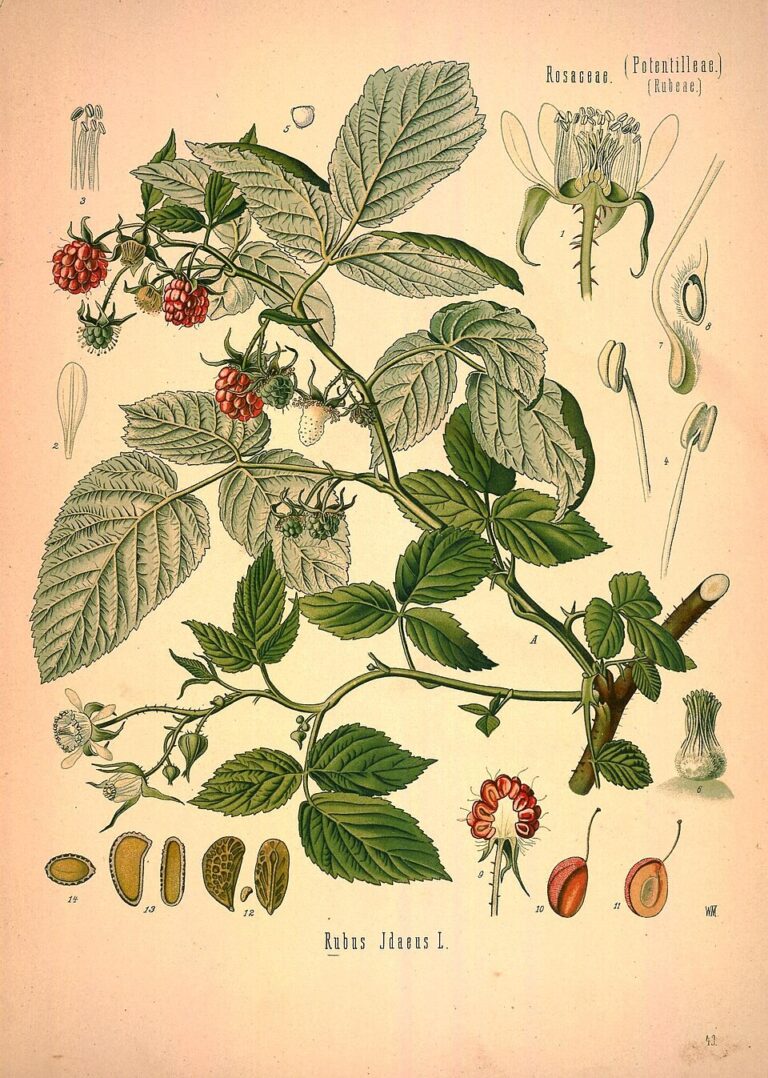
Wikimedia Commons / CC BY-SA
Parts Used
Leaf
Therapeutic Uses
Pregnancy preparation (third trimester — strengthens uterine muscle, shortens labour — traditional use with modest evidence), heavy menstruation, diarrhea, sore throat (gargle), morning sickness. The classic pregnancy herb.
Herbal Actions
Uterine tonic, astringent, anti-inflammatory, nutritive, antidiarrheal
Active Constituents
Tannins (gallotannins, ellagitannins), flavonoids (quercetin, kaempferol, rutin), vitamin C, minerals (manganese, magnesium), fragarine (alkaloid — uterine tonic)
Preparation Methods
☕ Herbal Tea🏺 Tincture
Traditional Preparation Notes
| Herbal Tea | 2 tsp dried leaf per 250ml, steep 10 min, 3x daily (from 32 weeks pregnancy) |
| Tincture | 3–5 ml (1:5, 25% ethanol), 3x daily |
| Notes | From 32 weeks pregnancy: traditional dose safe. Earlier in pregnancy: use with caution (uterine stimulant). Excellent combined with nettle for nutritive pregnancy tea. Antidiarrheal — effective for children. |
Safety Information
Safety Rating
✓ Generally Safe
Pregnancy
Caution in Pregnancy
Drug Interactions
None known
Contraindications: Avoid in first/second trimester (uterine stimulant). Third trimester: traditional use appears safe. Avoid with iron absorption concerns (tannins).
Side Effects: Laxative effect at high doses (tannins). Tannins reduce iron and drug absorption. Otherwise extremely safe.