
Hypericaceae
St. John’s Wort
Hypericum perforatum
⚠ Use with Caution
Avoid in Pregnancy
Native to: Europe, Western Asia, North Africa
Also known as: Tipton's Weed, Chase-devil, Klamath Weed
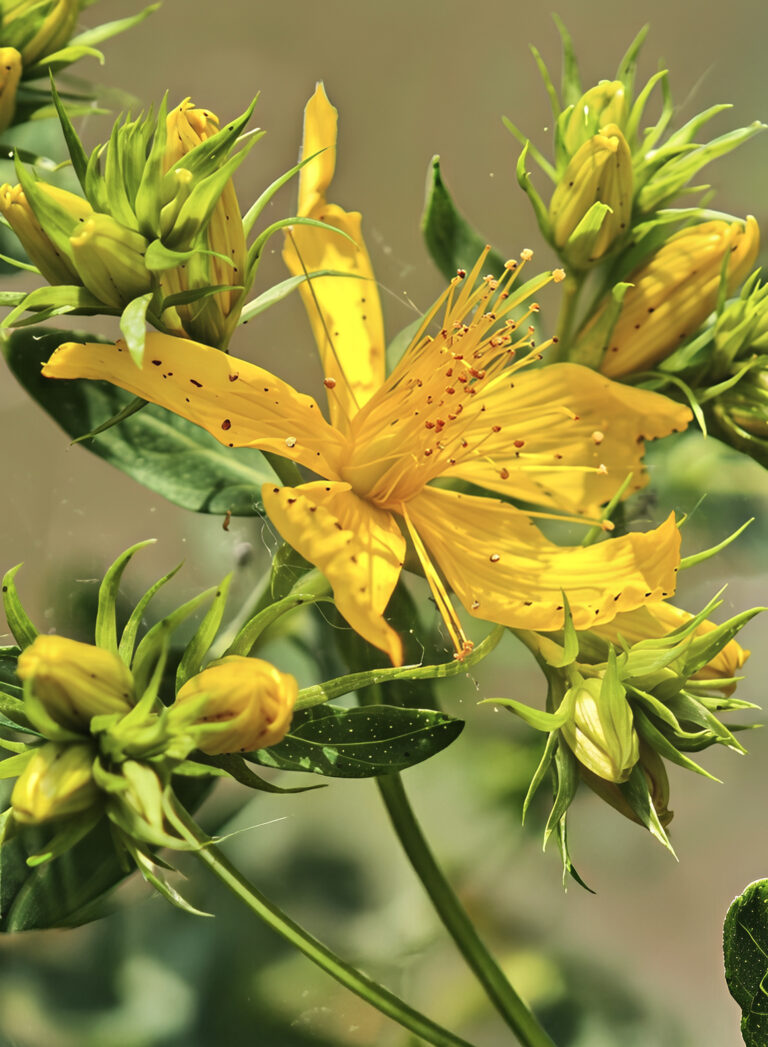
Wikimedia Commons / CC BY-SA
Parts Used
FlowerLeaf
Therapeutic Uses
Mild to moderate depression (evidence equivalent to SSRIs with fewer side effects in multiple meta-analyses), anxiety, seasonal affective disorder, nerve pain, menopausal symptoms.
Herbal Actions
Antidepressant, anxiolytic, antiviral, anti-inflammatory, vulnerary, nervine
Active Constituents
Hypericin, pseudohypericin, hyperforin, flavonoids (quercetin, rutin, kaempferol), xanthones
Preparation Methods
☕ Herbal Tea🏺 Tincture💊 Capsule🧴 Salve/Balm
Traditional Preparation Notes
| Herbal Tea | 2 tsp dried herb per 250ml, steep 10 min, 3x daily |
| Tincture | 2–4 ml (1:5, 60% ethanol), 3x daily |
| Notes | Clinical antidepressant effect requires 4–6 weeks. Standard extract: 300mg (0.3% hypericin) 3x daily. Topical oil (macerated in olive oil) for nerve pain. |
Safety Information
Safety Rating
⚠ Use with Caution
Pregnancy
Avoid in Pregnancy
Drug Interactions
⚠ Known interactions
Contraindications: MAJOR drug interactions via CYP3A4 induction — reduces efficacy of: oral contraceptives, antiretrovirals, cyclosporine, warfarin, digoxin, certain antidepressants (serotonin syndrome risk with SSRIs/MAOIs). Photosensitivity at high doses.
Side Effects: Photosensitivity (fair-skinned individuals), GI upset, dry mouth, dizziness. Serotonin syndrome risk with serotonergic drugs.