
Adoxaceae
Elderberry
Sambucus nigra
✓ Generally Safe
Consult Doctor
Native to: Europe, North Africa, West Asia
Also known as: Black Elder, European Elderberry, Common Elder
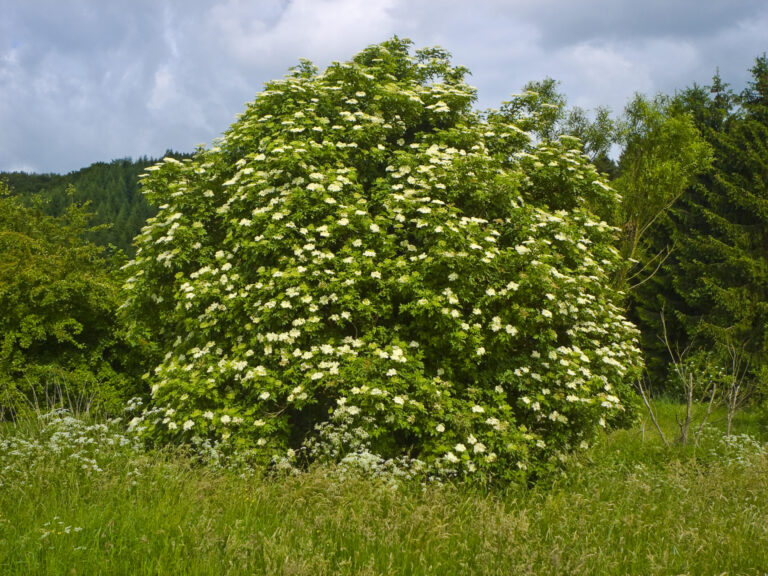
Wikimedia Commons / CC BY-SA
Parts Used
BerryFlower
Therapeutic Uses
Influenza (clinical trials: reduces duration by 4 days on average), common cold prevention, upper respiratory infections, immune support. Flowers: fever, colds, sinusitis.
Herbal Actions
Antiviral, immunostimulant, anti-inflammatory, antioxidant, diaphoretic (flowers)
Active Constituents
Anthocyanins (cyanidin-3-glucoside, cyanidin-3-sambubioside), flavonoids (rutin, quercetin), vitamins C and A, sambunigrin (raw berries — toxic)
Preparation Methods
🍯 Syrup☕ Herbal Tea🏺 Tincture💊 Capsule
Traditional Preparation Notes
| Herbal Tea | 1–2 tsp dried berries per 250ml, simmer 15 min, 2–3x daily |
| Tincture | 4–6 ml elderberry syrup or 3 ml tincture (1:5, 25% ethanol), 3x daily |
| Notes | Syrup most palatable and effective form. Raw berries contain sambunigrin — always cook before use. Flower tea: 2 tsp per 250ml, 3x daily for fever. |
Safety Information
Safety Rating
✓ Generally Safe
Pregnancy
Consult Doctor
Drug Interactions
None known
Contraindications: Raw, unripe berries toxic — causes nausea and vomiting. Theoretical concern with immunosuppressants (immune stimulation). Caution in autoimmune conditions.
Side Effects: GI upset from raw berries. Cooked/processed preparations generally very safe. Allergic reactions rare.