Asteraceae
Spilanthes
Acmella oleracea
✓ Generally Safe
Caution in Pregnancy
Native to: South America, tropics
Also known as: Toothache Plant, Electric Daisy, Para Cress, Buzz Buttons
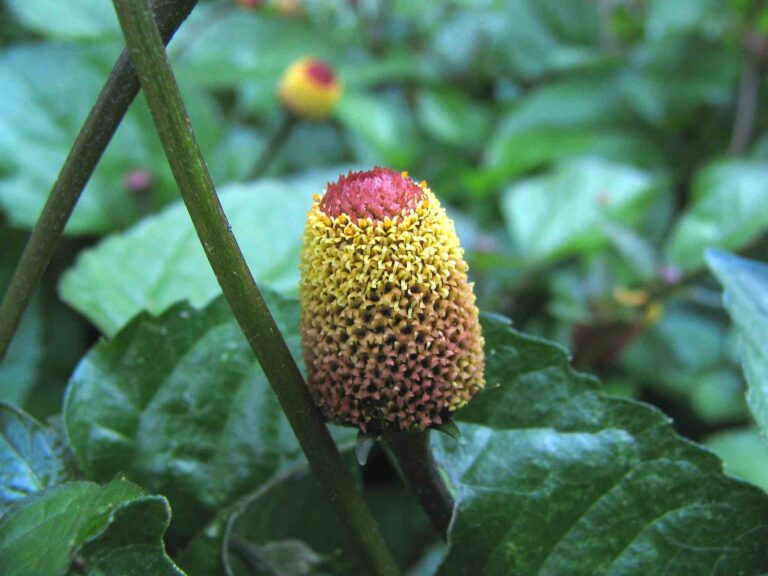
Wikimedia Commons / CC BY-SA
Parts Used
FlowerLeaf
Therapeutic Uses
Dental pain (topical — immediate numbing effect), oral infections, immune stimulation (similar to echinacea), salivary gland stimulation (Sjogren's syndrome), digestive bitters, fungal infections.
Herbal Actions
Local anesthetic (topical), immunostimulant, salivary stimulant, antifungal, antibacterial, diuretic
Active Constituents
Alkylamides (spilanthol/acmellonate — primary active), flavonoids (quercetin, kaempferol), essential oil, thymol
Preparation Methods
🏺 Tincture☕ Herbal Tea🧴 Salve/Balm
Traditional Preparation Notes
| Herbal Tea | 1 tsp fresh or dried flower/leaf per 250ml, steep 5 min, 3x daily — tingles intensely |
| Tincture | 1–3 ml (1:5, 60% ethanol), 3x daily |
| Notes | For dental pain: apply tincture directly to tooth and gum — numbs in 30 seconds. Tingling is normal and therapeutic (spilanthol). Excellent combined with echinacea for immune support. Fresh flower most potent. |
Safety Information
Safety Rating
✓ Generally Safe
Pregnancy
Caution in Pregnancy
Drug Interactions
None known
Contraindications: Avoid high doses in pregnancy (diuretic, possible uterotonic). Avoid with Asteraceae allergy.
Side Effects: Intense tingling/buzzing sensation (expected). Excessive salivation. GI discomfort at high doses.