Loganiaceae
Gelsemium
Gelsemium sempervirens
✗ High Risk
Avoid in Pregnancy
Native to: Southeastern United States
Also known as: Yellow Jasmine, False Jasmine, Carolina Jessamine, Evening Trumpet Flower
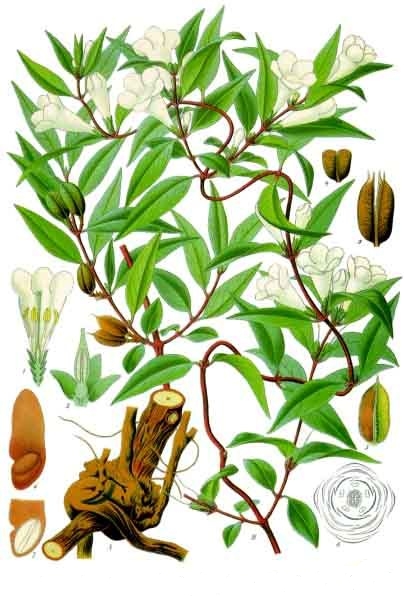
Wikimedia Commons / CC BY-SA
Parts Used
Root
Therapeutic Uses
Primarily HOMEOPATHIC use. Historically: neuralgia, migraine, trigeminal neuralgia, influenza with prostration, anxiety. EXTREMELY TOXIC as herbal preparation — never used at full herbal doses.
Herbal Actions
Neurological analgesic, antispasmodic, anxiolytic (at very low doses — homeopathic primarily)
Active Constituents
Indole alkaloids (gelsemine, gelsemicine, sempervirine — all highly toxic), coumarins
Preparation Methods
🏺 Tincture
Traditional Preparation Notes
| Herbal Tea | DO NOT USE — toxic |
| Tincture | Homeopathic only (30C, 200C, etc.) — no measurable alkaloids at homeopathic dilution. Herbal tincture: FATALLY TOXIC |
| Notes | One of the most toxic plants in North America. Alkaloids affect neuromuscular junction — causes ascending paralysis and respiratory failure. ONLY safe as homeopathic preparation (no measurable alkaloid). Never use herbal preparation. |
Safety Information
Safety Rating
✗ High Risk
Pregnancy
Avoid in Pregnancy
Drug Interactions
None known
Contraindications: DO NOT USE as herbal preparation. Fatally toxic. All parts toxic including nectar. Honey from flowers can cause poisoning. Homeopathic use only.
Side Effects: Respiratory paralysis and death at herbal doses. Ascending motor paralysis. Do not confuse with jasmine or honeysuckle flowers.