
Asteraceae
Chamomile Roman
Chamaemelum nobile
✓ Generally Safe
Safe in Pregnancy
Native to: Western Europe, North Africa
Also known as: Roman Chamomile, English Chamomile, Garden Chamomile, True Chamomile
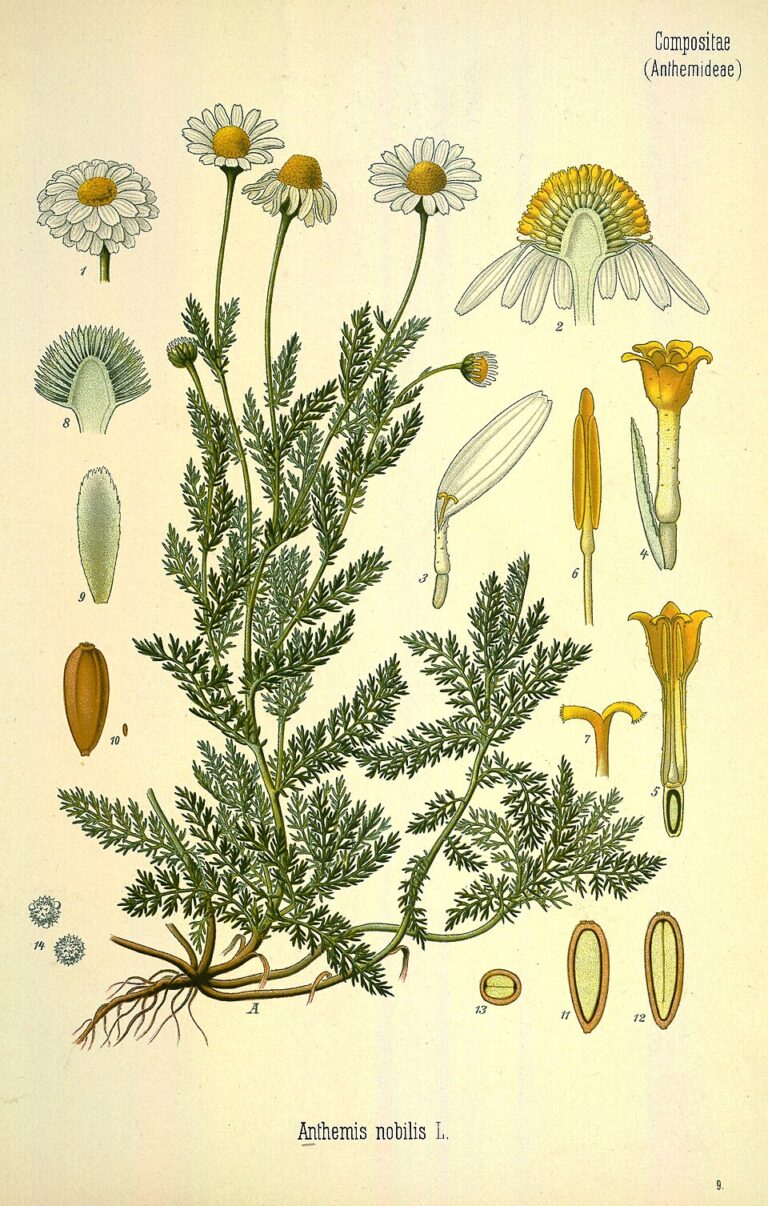
Wikimedia Commons / CC BY-SA
Parts Used
Flower
Therapeutic Uses
Anxiety, insomnia, digestive spasm, IBS, infantile colic, skin inflammation, menstrual cramps. Similar to German chamomile but more bitter and stronger antispasmodic — preferred for digestive use.
Herbal Actions
Anti-inflammatory, antispasmodic, nervine, carminative, bitter tonic
Active Constituents
Volatile oil (chamazulene, alpha-bisabolol — lower than German chamomile, isobutyl angelate — primary aroma component), flavonoids (apigenin, luteolin), sesquiterpene lactones (nobilin, dehydronobilin)
Preparation Methods
☕ Herbal Tea🏺 Tincture⚗️ Essential Oil
Traditional Preparation Notes
| Herbal Tea | 1–2 tsp dried flowers per 250ml, steep 10 min, 3x daily |
| Tincture | 2–4 ml (1:5, 40% ethanol), 3x daily |
| Notes | More bitter than German chamomile — stronger digestive bitter action. Nobilin more potent antispasmodic. Essential oil: 1–2% in carrier for topical use. Interchangeable with German chamomile for most uses. |
Safety Information
Safety Rating
✓ Generally Safe
Pregnancy
Safe in Pregnancy
Drug Interactions
Possible — consult doctor
Contraindications: Asteraceae allergy. Very rare cross-allergy with ragweed. Otherwise very safe.
Side Effects: Contact dermatitis (rare). Allergic reactions in Asteraceae-sensitive. Otherwise extremely safe.