Rhamnaceae
Cascara Sagrada
Frangula purshiana
⚠ Use with Caution
Avoid in Pregnancy
Native to: Pacific Northwest North America
Also known as: Sacred Bark, Bitter Bark, Chittem Bark, Shittimwood
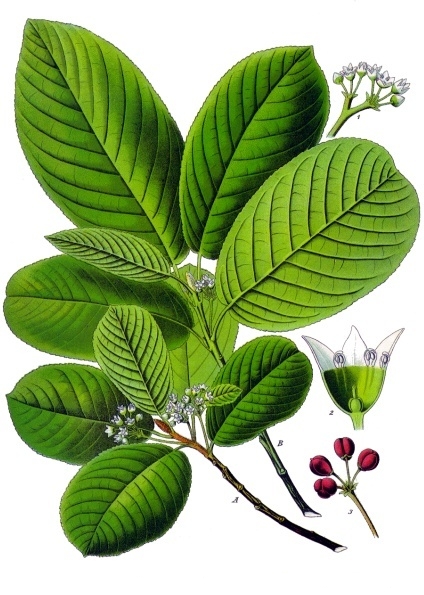
Wikimedia Commons / CC BY-SA
Parts Used
Bark
Therapeutic Uses
Chronic constipation (Commission E approved), bowel preparation. Gentler than senna — preferred for elderly and chronic use. Bark must be aged 1+ year to convert harsh anthranoids to milder cascarosides.
Herbal Actions
Stimulant laxative (mild-moderate), cholagogue, bitter tonic
Active Constituents
Anthraquinone glycosides (cascarosides A, B, C, D — primary; emodin, aloe-emodin, chrysophanol), must be aged minimum 1 year
Preparation Methods
💊 Capsule🏺 Tincture☕ Herbal Tea
Traditional Preparation Notes
| Herbal Tea | 1 tsp aged bark per 250ml, steep 10 min, once at bedtime |
| Tincture | 2–5 ml (1:5, 25% ethanol, aged bark), once at bedtime |
| Notes | AGED BARK ONLY (1+ years). Fresh bark causes violent catharsis. Maximum 2-week continuous use. Take with large glass of water. Produce bowel movement in 6–8 hours. One of the most popular OTC laxatives historically. |
Safety Information
Safety Rating
⚠ Use with Caution
Pregnancy
Avoid in Pregnancy
Drug Interactions
Possible — consult doctor
Contraindications: Fresh bark toxic. Avoid in pregnancy, IBD, appendicitis, intestinal obstruction. Maximum 2 weeks. Electrolyte monitoring with prolonged use.
Side Effects: Abdominal cramping. Electrolyte imbalance. Melanosis coli (harmless). Dependency with long-term use. Fresh bark: violent catharsis.