Brassicaceae
Watercress
Nasturtium officinale
✓ Generally Safe
Caution in Pregnancy
Native to: Europe, Western Asia
Also known as: Common Watercress, Garden Cress, True Watercress, Well Cress
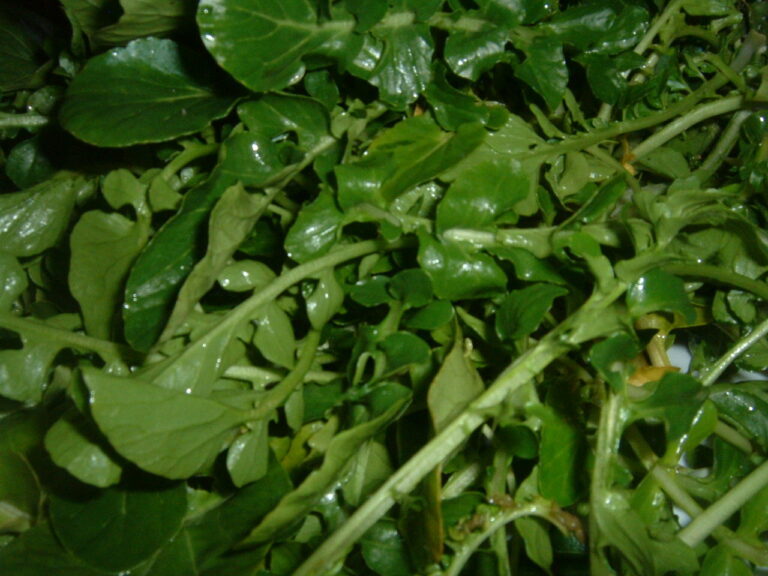
Wikimedia Commons / CC BY-SA
Parts Used
Aerial parts
Therapeutic Uses
Nutritional deficiency (vitamins C and K, iron, iodine), respiratory catarrh (expectorant), antioxidant and cancer prevention (PEITC), thyroid support.
Herbal Actions
Nutritive, expectorant, diuretic, antiscorbutic, antioxidant, anticancer (PEITC — potent inducer of detoxification enzymes), thyroid supportive (iodine)
Active Constituents
Glucosinolates (gluconasturtiin — hydrolyzed to phenethyl isothiocyanate PEITC), vitamins C and K (exceptional — 160% RDA/100g), beta-carotene, calcium, iron, iodine, flavonoids (quercetin, myricetin)
Preparation Methods
Juice☕ Herbal TeaFood
Traditional Preparation Notes
| Herbal Tea | Handful fresh watercress per 250ml cold infusion or as salad daily |
| Tincture | Fresh juice: 30–60ml 2–3x daily. As food: large handful daily. |
| Notes | Wild harvesting: ensure clean water source — can harbor liver fluke (Fasciola hepatica). Best eaten raw or juiced — PEITC volatile and destroyed by cooking. One of most nutritionally dense vegetables. Traditional spring tonic. |
Safety Information
Safety Rating
✓ Generally Safe
Pregnancy
Caution in Pregnancy
Drug Interactions
Possible — consult doctor
Contraindications: Liver fluke risk from wild sources in contaminated water. High vitamin K — caution with warfarin. Kidney disease (oxalate). Avoid high doses in pregnancy.
Side Effects: GI irritation at high concentrated juice doses. Liver fluke (wild harvest risk). GERD aggravation. Generally very safe as food.