Asteraceae
Xanthium
Xanthium sibiricum
✗ High Risk
Avoid in Pregnancy
Native to: Asia, naturalized worldwide
Also known as: Siberian Cocklebur, Cang Er Zi, Spiny Clotbur
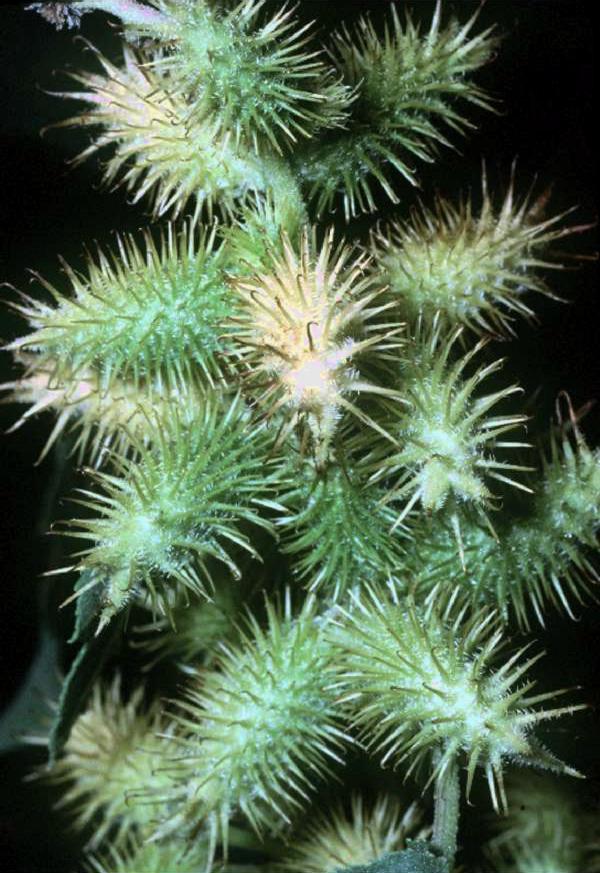
Wikimedia Commons / CC BY-SA
Parts Used
Fruit
Therapeutic Uses
Sinusitis and nasal congestion (TCM — Cang Er Zi San formula, well-validated), rhinitis, headache from sinus congestion. CAUTION: seeds contain highly hepatotoxic compound.
Herbal Actions
Anticancer (xanthatin — apoptosis induction in cancer cells), anti-inflammatory, antimicrobial, decongestant
Active Constituents
Xanthanolides (xanthatin — cytotoxic, xanthanol, isoxanthanol), chlorogenic acid, carboxyatractyloside (HIGHLY TOXIC in seeds — hepatotoxic)
Preparation Methods
🍵 Decoction💊 Capsule
Traditional Preparation Notes
| Herbal Tea | 3–9g dried fruit per 500ml, simmer 20 min, 2x daily — prepared form only |
| Tincture | Cang Er Zi San formula (commercial): follow manufacturer guidance |
| Notes | Processed fruit (heat/frying) reduces but does not eliminate toxin. Use only in commercial standardized formulas. Raw seeds: HIGHLY HEPATOTOXIC (carboxyatractyloside causes liver failure). Cang Er Zi San formula most safe form. |
Safety Information
Safety Rating
✗ High Risk
Pregnancy
Avoid in Pregnancy
Drug Interactions
None known
Contraindications: Raw seeds: DO NOT USE — hepatotoxic. Avoid in liver disease. Avoid in pregnancy. Standardized formula only.
Side Effects: Carboxyatractyloside: acute liver failure. Processed fruit: GI upset, nausea. Use standardized commercial preparation only.