
Araceae
Taro Root
Colocasia esculenta
⚠ Use with Caution
Safe in Pregnancy
Native to: Southeast Asia, India (cultivated tropics worldwide)
Also known as: Taro, Elephant Ear, Dasheen, Eddoe
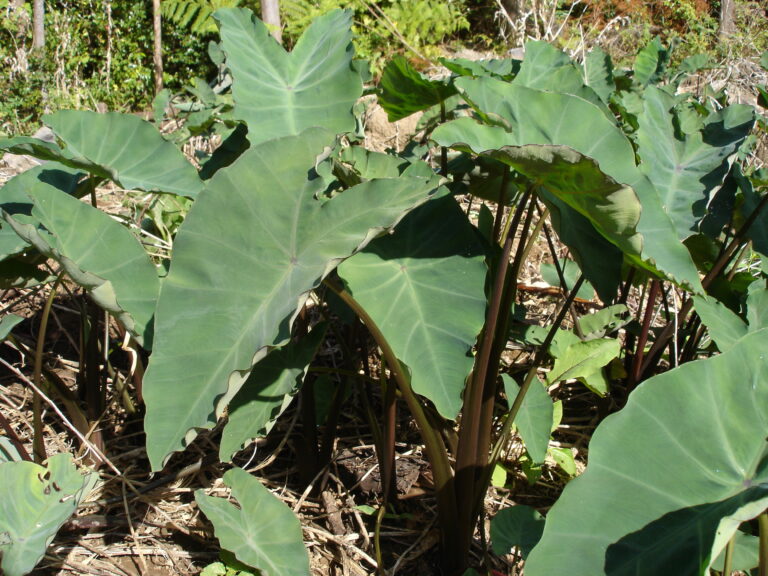
Wikimedia Commons / CC BY-SA
Parts Used
RootLeaf
Therapeutic Uses
Nutritional supplementation, digestive health, celiac disease (gluten-free), carbohydrate energy source, bowel health (resistant starch).
Herbal Actions
Nutritive, digestive (cooked), antidiarrheal (tannins in cooked root), antioxidant
Active Constituents
Starch (25–30%), oxalic acid (raw — toxic, destroyed by cooking), potassium, calcium oxalate crystals (toxic raw), flavonoids, polysaccharides, vitamins B6 and E
Preparation Methods
FoodPowder
Traditional Preparation Notes
| Herbal Tea | N/A — food preparation |
| Tincture | Cooked taro: as food. Raw: toxic (calcium oxalate crystals). |
| Notes | MUST BE COOKED — raw taro contains calcium oxalate crystals causing intense burning and swelling of mouth and throat. Traditional staple food throughout Pacific Islands, Asia, Africa. Poi (Hawaiian) most famous preparation. Excellent gluten-free starch. |
Safety Information
Safety Rating
⚠ Use with Caution
Pregnancy
Safe in Pregnancy
Drug Interactions
None known
Contraindications: Raw taro: toxic (calcium oxalate). Cook thoroughly. Kidney stones (oxalate). Otherwise safe when cooked.
Side Effects: Raw: burning mouth syndrome, laryngeal edema (serious). Cooked: very safe. Oxalate content (kidney stones risk with excessive consumption).