Rutaceae
Tangerine Peel
Citrus reticulata
✓ Generally Safe
Caution in Pregnancy
Native to: Southeast Asia, China (cultivated)
Also known as: Chen Pi, Aged Tangerine Peel, Mandarin Peel, Aged Citrus
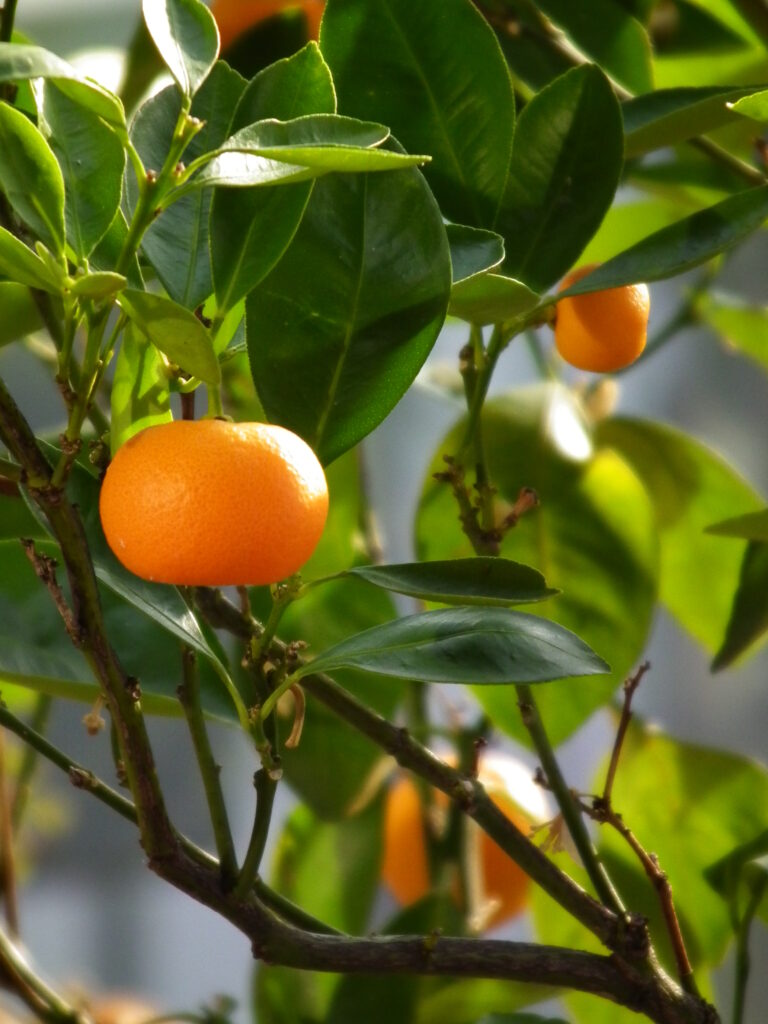
Wikimedia Commons / CC BY-SA
Parts Used
Peel
Therapeutic Uses
Digestive stagnation (TCM — chen pi dissolves phlegm and qi stagnation), cancer prevention (nobiletin — significant anticancer research), liver support, respiratory catarrh, IBS.
Herbal Actions
Carminative, cholagogue, anti-inflammatory (nobiletin — potent), antitumor (nobiletin — research), expectorant, digestive
Active Constituents
Flavonoids (hesperidin, nobiletin — primary, tangeretin, sinensetin), volatile oil (limonene, gamma-terpinene, alpha-pinene), polymethoxylated flavones (nobiletin — powerful anti-inflammatory), carotenoids
Preparation Methods
🍵 Decoction🏺 Tincture💊 Capsule
Traditional Preparation Notes
| Herbal Tea | 3–9g dried aged peel per 500ml, simmer 20 min — aromatic, 2x daily |
| Tincture | 3–5 ml (1:5, 40% ethanol), 3x daily |
| Notes | Chen Pi = aged (3–15 years) tangerine peel — becomes more aromatic and medicinal with age. Nobiletin: most potent polymethoxylated flavone — anticancer, anti-inflammatory, neuroprotective research. Appears in many TCM digestive formulas. |
Safety Information
Safety Rating
✓ Generally Safe
Pregnancy
Caution in Pregnancy
Drug Interactions
Possible — consult doctor
Contraindications: CYP interactions (limonene, nobiletin). Avoid in GERD (stimulates acid). Caution in pregnancy.
Side Effects: GI irritation (stimulates secretions). CYP drug interactions. Very well tolerated at therapeutic doses.