Lauraceae
Camphor Tree
Cinnamomum camphora
⚠ Use with Caution
Avoid in Pregnancy
Native to: East Asia, China, Japan, Taiwan
Also known as: Camphor, Camphor Laurel, Formosa Camphor
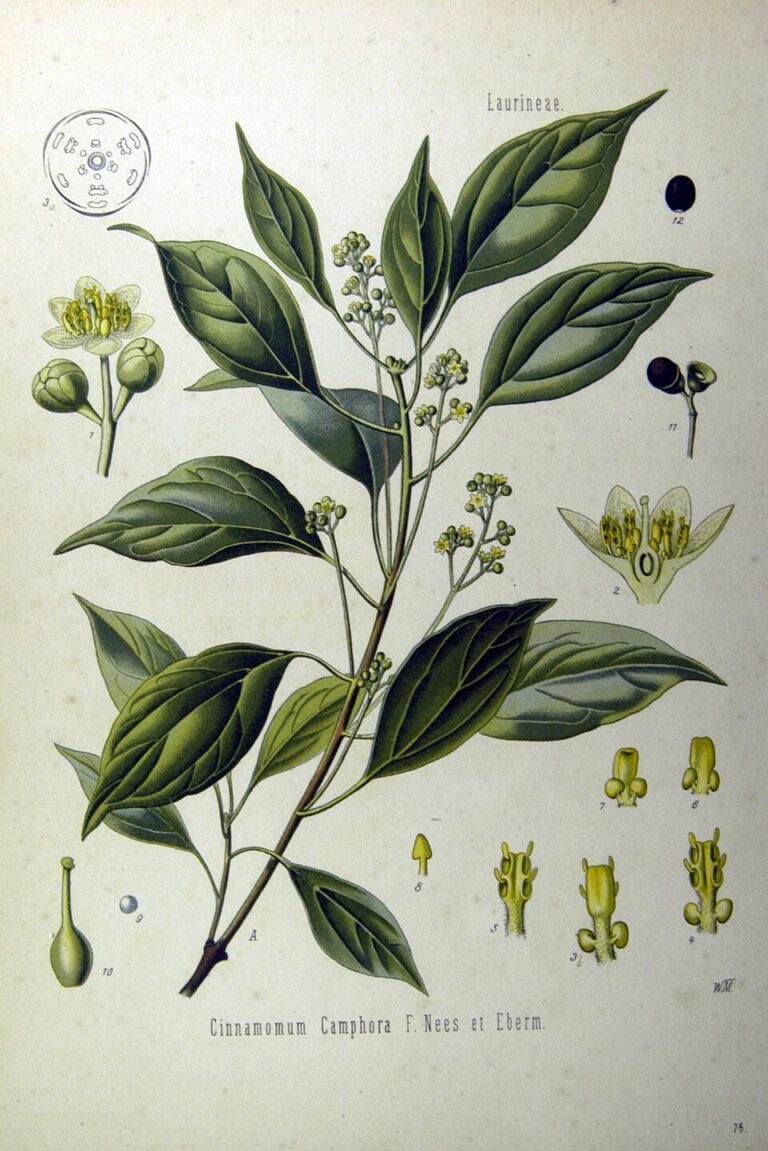
Wikimedia Commons / CC BY-SA
Parts Used
Wood
Therapeutic Uses
Muscle pain (topical), respiratory congestion (vapour rub), arthritis, fungal infections, cold symptoms. Common ingredient in Vicks VapoRub and Tiger Balm.
Herbal Actions
Analgesic (topical), antifungal, antimicrobial, respiratory decongestant (topical), anti-inflammatory, mild cardiovascular stimulant
Active Constituents
Camphor (borneol ketone — primary, 50–96% of oil), safrole, linalool, cineole, terpineol
Preparation Methods
🧴 Salve/Balm⚗️ Essential Oil
Traditional Preparation Notes
| Herbal Tea | NOT for internal use — toxic |
| Tincture | TOPICAL ONLY: 1–3% camphor in carrier oil or cream. Vapour: few drops in diffuser. |
| Notes | EXTERNAL USE ONLY. Never apply near infants' face (fatal respiratory depression). Oral ingestion toxic — minimum lethal dose for children: 1g. Topical preparations safe at 3–11% concentration for adults. Common in OTC pain rubs. |
Safety Information
Safety Rating
⚠ Use with Caution
Pregnancy
Avoid in Pregnancy
Drug Interactions
None known
Contraindications: NEVER ingest — toxic. Never apply near infants or young children (especially near face). Avoid during pregnancy. Never on broken skin.
Side Effects: Topical: skin irritation, rare sensitization. Ingestion: convulsions, respiratory failure, liver damage, death. Safe topically at appropriate concentrations.