Asteraceae
Sweet Annie
Artemisia annua
⚠ Use with Caution
Avoid in Pregnancy
Native to: China, Asia
Also known as: Annual Wormwood, Sweet Wormwood, Qing Hao
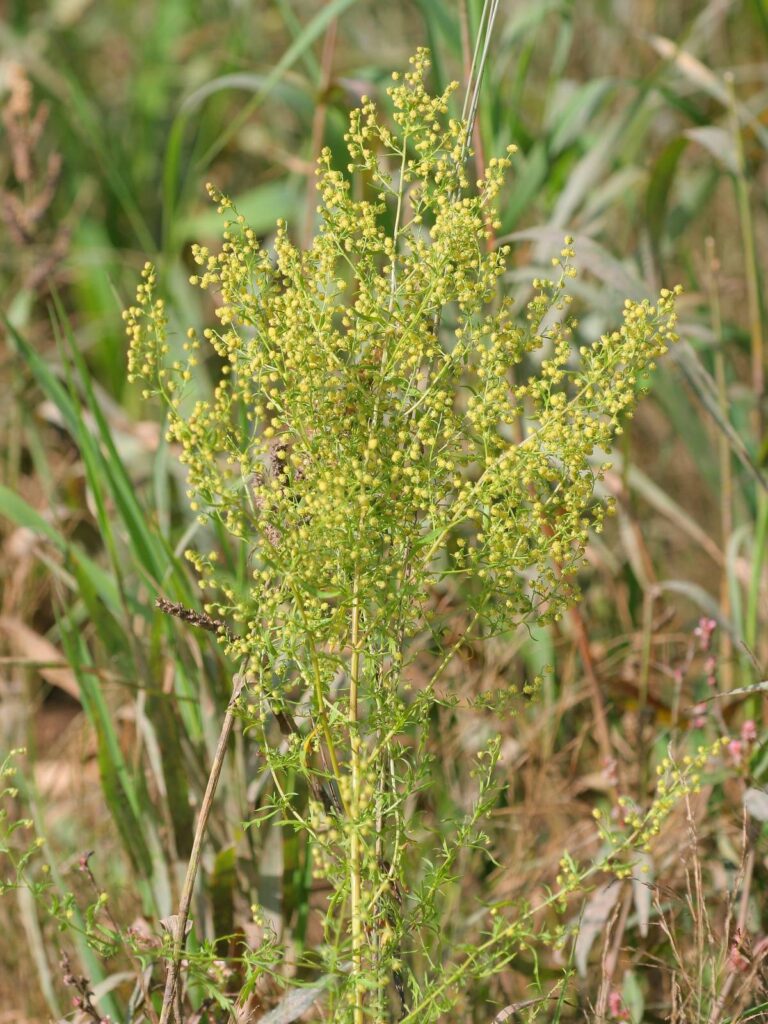
Wikimedia Commons / CC BY-SA
Parts Used
LeafFlower
Therapeutic Uses
Malaria (artemisinin — first-line WHO treatment), SIBO, intestinal parasites, Lyme disease support, cancer (artemisinin research ongoing), viral infections including COVID-19 (preliminary research).
Herbal Actions
Antimalarial (artemisinin — WHO essential medicine), antiviral, anti-inflammatory, anticancer (artemisinin), antiparasitic, immunomodulator
Active Constituents
Artemisinin (sesquiterpene endoperoxide — primary active), artemisin, flavonoids (artemetin, casticin), essential oil, coumarin, scopoletin
Preparation Methods
☕ Herbal Tea🏺 Tincture💊 Capsule
Traditional Preparation Notes
| Herbal Tea | 5g dried herb per 500ml, steep 15 min, 2x daily — do not boil (artemisinin heat-sensitive) |
| Tincture | 3–5 ml (1:5, 60% ethanol), 3x daily |
| Notes | CRITICAL: Do not boil — artemisinin destroyed by heat. For malaria: artemisinin combination therapy (ACT) drugs preferred over herb. Herb for prevention and mild cases. WHO first-line malaria treatment derived from this plant. Avoid long-term use. |
Safety Information
Safety Rating
⚠ Use with Caution
Pregnancy
Avoid in Pregnancy
Drug Interactions
⚠ Known interactions
Contraindications: Avoid in pregnancy (artemisinin embryotoxic). Avoid long-term use. Contains thujone traces — neurological risk. Avoid with CYP3A4 drugs (artemisinin induces).
Side Effects: Nausea, diarrhea. Rare neurological effects (thujone). Hepatotoxicity with prolonged use. Bitter taste.