Apiaceae
Sweet Cicely
Myrrhis odorata
✓ Generally Safe
Safe in Pregnancy
Native to: Mountain regions of Europe
Also known as: Garden Myrrh, European Sweet Cicely, Sweet Chervil
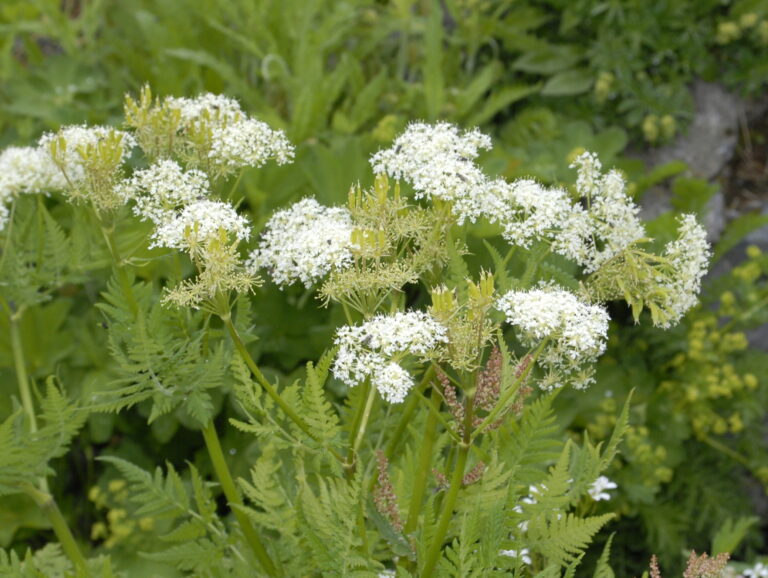
Wikimedia Commons / CC BY-SA
Parts Used
LeafSeedRoot
Therapeutic Uses
Digestive complaints (flatulence, IBS), respiratory catarrh, coughs, anorexia. Used as a mild sweetener in cooking. Traditional herb for the elderly — promotes appetite and digestion.
Herbal Actions
Carminative, expectorant, antispasmodic, stomachic, mild tonic
Active Constituents
Volatile oil (anethole — sweet anise-like, 70–80%), coumarins, flavonoids, phenolic acids
Preparation Methods
☕ Herbal Tea🏺 Tincture
Traditional Preparation Notes
| Herbal Tea | 2 tsp fresh leaf or 1 tsp dried per 250ml, steep 10 min, 3x daily |
| Tincture | 2–4 ml (1:5, 40% ethanol), 3x daily |
| Notes | Leaves and roots sweet — can reduce sugar in recipes. Very gentle herb — suitable for children and elderly. All parts edible as food. Combine with fennel for digestive support. |
Safety Information
Safety Rating
✓ Generally Safe
Pregnancy
Safe in Pregnancy
Drug Interactions
None known
Contraindications: Very few contraindications. Photosensitivity possible (coumarins, furanocoumarins). Generally one of the safest herbs.
Side Effects: Photosensitivity from coumarins. Contact dermatitis (rare). Essentially no adverse effects at normal use.