Lamiaceae
Sage
Salvia officinalis
⚠ Use with Caution
Avoid in Pregnancy
Native to: Mediterranean
Also known as: Common Sage, Garden Sage, True Sage, Dalmatian Sage
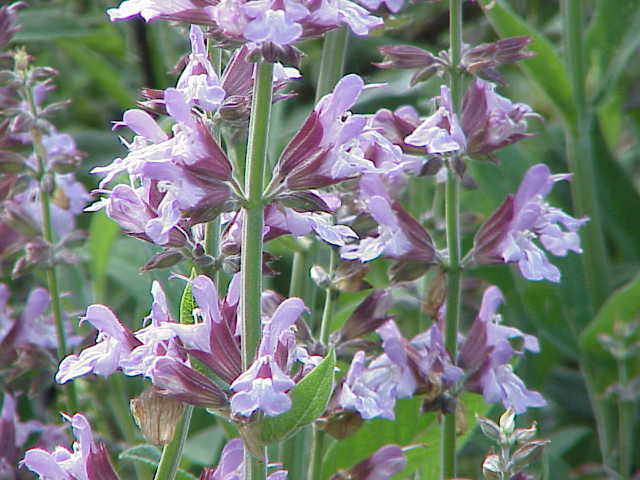
Wikimedia Commons / CC BY-SA
Parts Used
Leaf
Therapeutic Uses
Menopausal hot flushes and sweating (clinical evidence — reduces frequency 50%), Alzheimer's disease (inhibits acetylcholinesterase), sore throat (gargle), gingivitis, oral ulcers, excessive perspiration. Renowned memory herb of antiquity.
Herbal Actions
Antiseptic, antimicrobial, antifungal, astringent, antidiaphoretic (reduces sweating), phytoestrogenic, cognitive enhancer, anti-inflammatory
Active Constituents
Volatile oil (thujone — 35–60%, camphor, 1,8-cineole, borneol), rosmarinic acid, carnosic acid, ursolic acid, flavonoids (luteolin, apigenin), estrogen-like diterpenes
Preparation Methods
☕ Herbal Tea🏺 Tincture⚗️ Essential Oil
Traditional Preparation Notes
| Herbal Tea | 1–2 tsp dried leaf per 250ml, steep 10 min — do NOT boil (thujone volatile), 2–3x daily |
| Tincture | 2–4 ml (1:5, 45% ethanol), 2–3x daily |
| Notes | Do not boil — thujone volatile. For night sweats: drink cold sage tea before bed. For sore throat: gargle strong tea 4x daily. Long-term internal use: limit to 4–8 weeks (thujone accumulation). Spanish sage (S. lavandulifolia) preferred for Alzheimer's — lower thujone. |
Safety Information
Safety Rating
⚠ Use with Caution
Pregnancy
Avoid in Pregnancy
Drug Interactions
Possible — consult doctor
Contraindications: Avoid in pregnancy (thujone — uterotonic). Avoid with epilepsy (thujone lowers seizure threshold). Avoid with anticonvulsants, sedatives. Do not use thujone-rich essential oil internally.
Side Effects: Thujone accumulation: neurological effects, seizures with prolonged high-dose use. Generally safe at culinary doses and short therapeutic courses.