Iridaceae
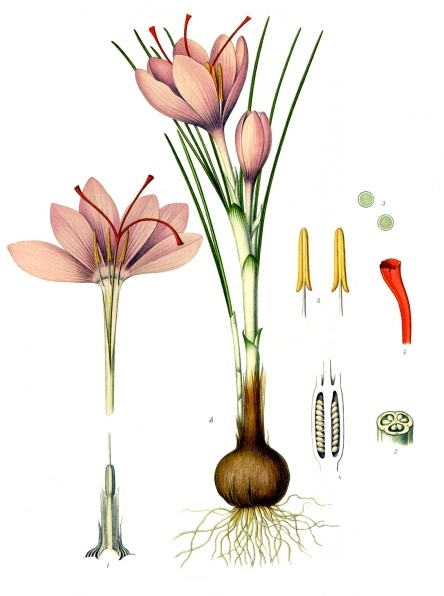
Saffron
Crocus sativus
✓ Generally Safe
Caution in Pregnancy
Native to: Southwest Asia, Iran
Also known as: True Saffron, Spanish Saffron, Kesar, Zafran
Wikimedia Commons / CC BY-SA
Parts Used
Stigma
Therapeutic Uses
Mild to moderate depression (multiple RCTs — comparable to SSRIs at 30mg/day), anxiety, PMS mood symptoms, cognitive enhancement (memory), SSRI-induced sexual dysfunction, age-related macular degeneration (crocetin).
Herbal Actions
Antidepressant, anxiolytic, neuroprotective, antioxidant, aphrodisiac, anti-inflammatory, anti-cancer (crocetin)
Active Constituents
Carotenoids (crocin, crocetin — primary actives, picrocrocin — bitter), safranal (volatile aroma compound), riboflavin, thiamine
Preparation Methods
🏺 Tincture💊 Capsule☕ Herbal Tea
Traditional Preparation Notes
| Herbal Tea | 15–20 stigmas per 250ml warm water or milk, steep 5 min, 1–2x daily |
| Tincture | Standardized extract (crocin): 30mg daily (clinical dose) or 15mg 2x daily |
| Notes | Clinical antidepressant dose: 30mg saffron extract daily = 0.5–1g actual saffron threads. Effects in 4–6 weeks. One of the most promising natural antidepressants. Expensive but effective at low doses. |
Safety Information
Safety Rating
✓ Generally Safe
Pregnancy
Caution in Pregnancy
Drug Interactions
Possible — consult doctor
Contraindications: Avoid high doses in pregnancy (uterotonic at >5g of saffron — far above therapeutic dose). Caution with antidepressants (serotonergic). Very high doses toxic.
Side Effects: Very high doses (5g+): anxiety, vomiting, bleeding. Therapeutic doses extremely safe. Allergic reactions possible.