Plantaginaceae
Picrorhiza
Picrorhiza kurroa
⚠ Use with Caution
Caution in Pregnancy
Native to: Himalayan mountains (India, Nepal)
Also known as: Kutki, Katuki, Hu Huang Lian, Kuru
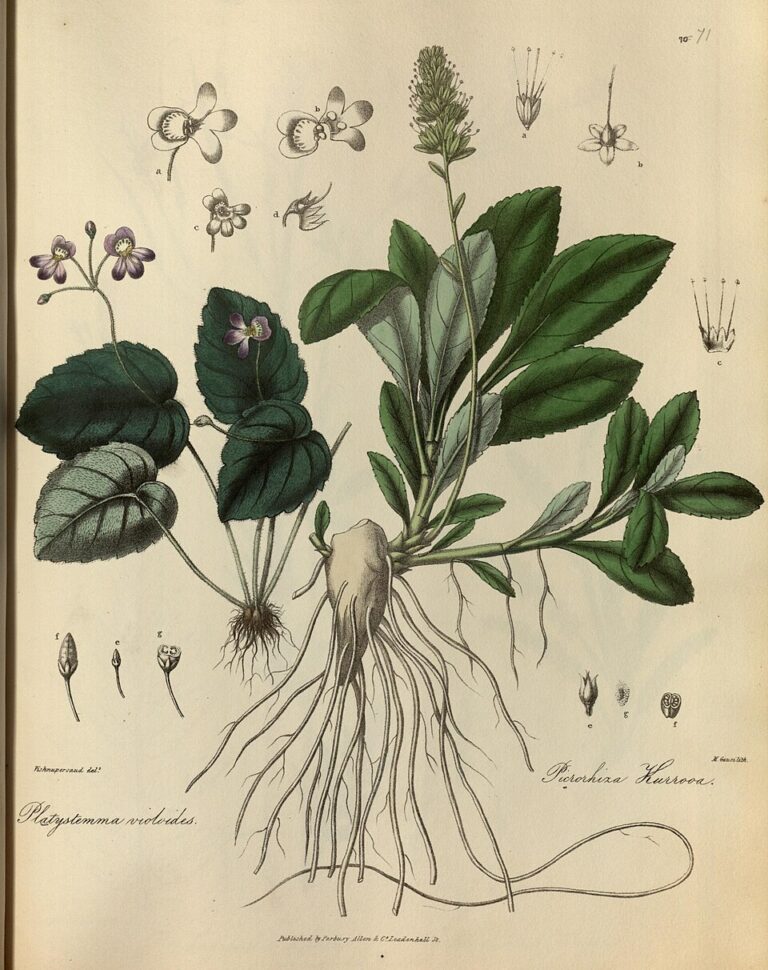
Wikimedia Commons / CC BY-SA
Parts Used
Root
Therapeutic Uses
Liver diseases (hepatitis, cirrhosis — clinical trials India, comparable to silymarin), asthma (immunomodulation), fever, autoimmune hepatitis, cholestasis. Potent Himalayan liver herb.
Herbal Actions
Hepatoprotective, immunomodulator, cholagogue, bitter tonic, anti-inflammatory, antipyretic, laxative (large doses)
Active Constituents
Iridoid glycosides (picroside I and II — primary actives, kutkoside), phenolic glycosides (androsin, picein), cucurbitacin glycosides
Preparation Methods
💊 Capsule🏺 Tincture🍵 Decoction
Traditional Preparation Notes
| Herbal Tea | 0.5 tsp dried root per 250ml, steep 10 min — very bitter, 2x daily |
| Tincture | 1–2 ml (1:5, 60% ethanol), 2–3x daily — low dose herb |
| Notes | Endangered — use cultivated sources. Very potent — small doses effective. Standardized extract (kutkoside + picroside I): 400mg daily. Combine with milk thistle for synergistic liver protection. |
Safety Information
Safety Rating
⚠ Use with Caution
Pregnancy
Caution in Pregnancy
Drug Interactions
Possible — consult doctor
Contraindications: Endangered species — ethical sourcing essential. Avoid in pregnancy. Large doses: severe diarrhea. Caution in autoimmune conditions.
Side Effects: GI discomfort, diarrhea at high doses. Allergic reactions. Autoimmune stimulation.