
Gentianaceae
Centaury
Centaurium erythraea
✓ Generally Safe
Caution in Pregnancy
Native to: Europe, North Africa, Western Asia
Also known as: Common Centaury, European Centaury, Bitter Herb
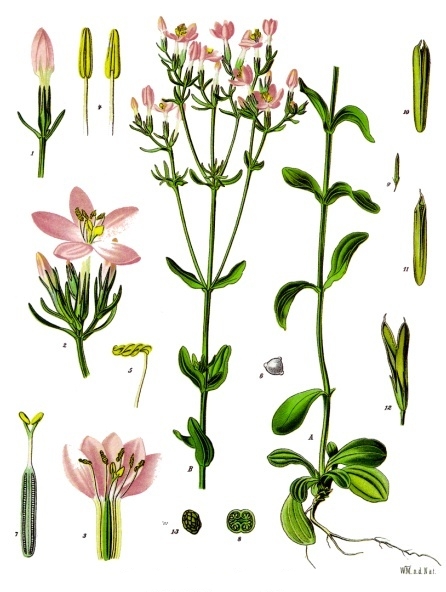
Wikimedia Commons / CC BY-SA
Parts Used
LeafFlower
Therapeutic Uses
Loss of appetite, dyspepsia, liver and gallbladder sluggishness, fever management, digestive atony, anorexia. Classic European digestive bitter — German Commission E approved for dyspepsia.
Herbal Actions
Bitter tonic, cholagogue, antipyretic, carminative, mild laxative, digestive stimulant
Active Constituents
Secoiridoid bitter glycosides (swertiamarin, gentiopicroside, centapicrin), xanthones, flavonoids, phenolic acids, alkaloids (gentianine)
Preparation Methods
☕ Herbal Tea🏺 Tincture
Traditional Preparation Notes
| Herbal Tea | 1 tsp dried herb per 250ml, steep 10 min — very bitter, 3x daily before meals |
| Tincture | 1–3 ml (1:5, 40% ethanol), 15–30 min before meals |
| Notes | Must taste bitter to activate cephalic digestive response. Small doses effective. Excellent combined with gentian and dandelion root as digestive bitters formula. |
Safety Information
Safety Rating
✓ Generally Safe
Pregnancy
Caution in Pregnancy
Drug Interactions
None known
Contraindications: Avoid in peptic ulcer, gastritis (stimulates acid). Avoid in pregnancy (high doses emmenagogue). No significant drug interactions.
Side Effects: GI irritation at high doses (acid stimulation). Generally very well tolerated.