Rosaceae
Meadowsweet
Filipendula ulmaria
✓ Generally Safe
Caution in Pregnancy
Native to: Europe, Western Asia
Also known as: Queen of the Meadow, Meadwort, Bridewort
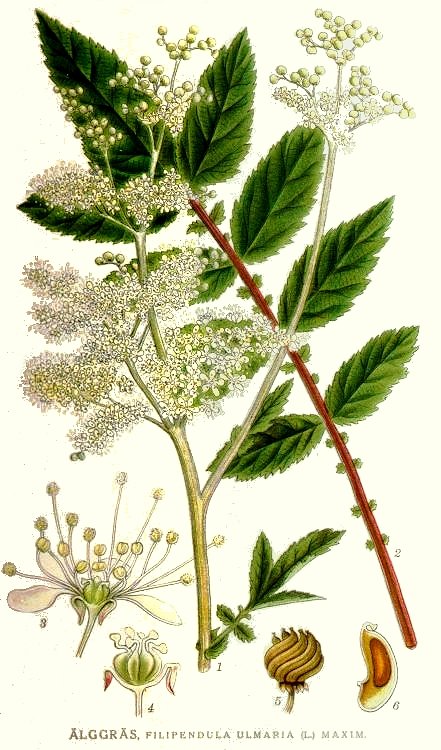
Wikimedia Commons / CC BY-SA
Parts Used
FlowerLeaf
Therapeutic Uses
Gastric ulcers (gastroprotective despite salicylate content), GERD, gastritis, hyperacidity, rheumatic pain, fever, headaches, UTIs. Paradoxically, the salicylates here are buffered by tannins — actually PROTECTS stomach mucosa.
Herbal Actions
Anti-inflammatory, antacid, antiulcer, astringent, analgesic, antipyretic, diuretic
Active Constituents
Salicylates (salicylaldehyde, methyl salicylate, spirein — salicylic acid precursors), flavonoids (quercetin, kaempferol, rutin), tannins, volatile oils
Preparation Methods
☕ Herbal Tea🏺 Tincture
Traditional Preparation Notes
| Herbal Tea | 2 tsp dried herb per 250ml, steep 10 min (do NOT boil — volatile compounds lost), 3x daily |
| Tincture | 2–4 ml (1:5, 25% ethanol), 3x daily |
| Notes | Never boil — volatile salicylates lost. Cold or warm infusion only. For gastric use: drink before meals. Flowers more aromatic and preferred over leaves. Aspirin was originally synthesized from meadowsweet derivatives. |
Safety Information
Safety Rating
✓ Generally Safe
Pregnancy
Caution in Pregnancy
Drug Interactions
Possible — consult doctor
Contraindications: Avoid in aspirin/salicylate sensitivity. Caution with anticoagulants. Avoid in pregnancy (salicylates). Avoid in children with fever (Reye's syndrome risk, like aspirin).
Side Effects: GI upset in salicylate-sensitive individuals. Rare allergic reactions. Paradoxically gentle on the stomach despite salicylate content.