Berberidaceae
Berberine
Berberis vulgaris
⚠ Use with Caution
Avoid in Pregnancy
Native to: Europe, Western Asia, North Africa
Also known as: Common Barberry, European Barberry, Zereshk
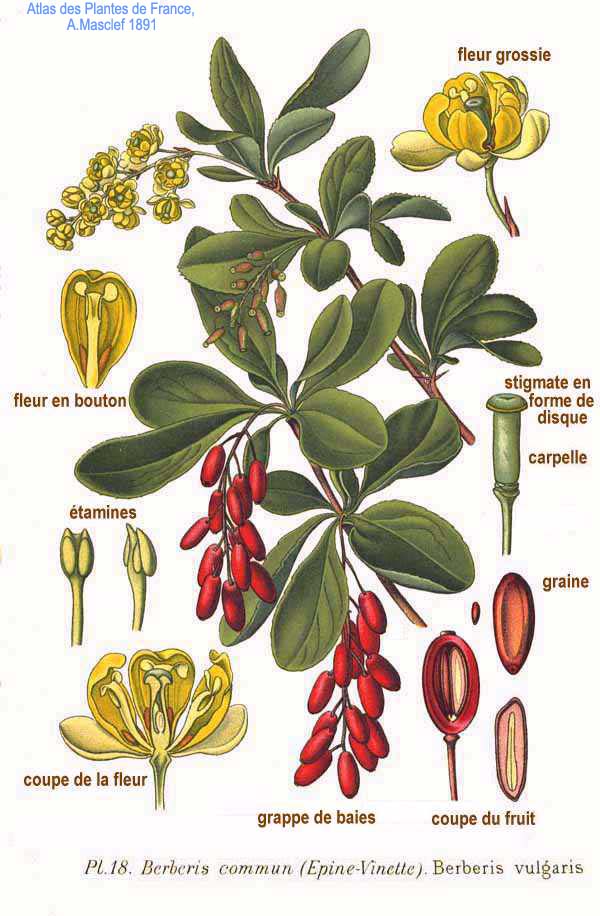
Wikimedia Commons / CC BY-SA
Parts Used
BarkRootBerry
Therapeutic Uses
Type 2 diabetes (clinical trials show efficacy comparable to metformin), hypercholesterolemia, SIBO, traveler's diarrhea, PCOS (insulin resistance), H. pylori, oral infections. Berberine has remarkable metabolic effects.
Herbal Actions
Antimicrobial, antifungal, antidiarrheal, hypoglycemic, hypolipidemic, anti-inflammatory, immunostimulant, bitter tonic
Active Constituents
Isoquinoline alkaloids: berberine (primary active — 0.5–6%), berbamine, palmatine, jatrorrhizine, columbamine
Preparation Methods
🏺 Tincture💊 Capsule🍵 Decoction
Traditional Preparation Notes
| Herbal Tea | 1 tsp dried bark per 250ml, simmer 15 min, 2–3x daily — very bitter |
| Tincture | 2–4 ml (1:5, 60% ethanol), 3x daily before meals |
| Notes | Berberine HCl extract: 500mg 3x daily with meals for metabolic effects. CRITICAL: take 30 min BEFORE meals for glucose control. Separate from antibiotics by 2 hours (antibacterial competition). Short cycles recommended: 8 weeks on, 4 weeks off. |
Safety Information
Safety Rating
⚠ Use with Caution
Pregnancy
Avoid in Pregnancy
Drug Interactions
⚠ Known interactions
Contraindications: Contraindicated in pregnancy (uterotonic, teratogenic potential). Avoid with CYP3A4/2D6 substrates, cyclosporine, metformin (synergistic hypoglycemia). Avoid in neonates.
Side Effects: GI upset, nausea, constipation at high doses. Yellow staining. Bitter taste. Theoretical reduction in gut microbiome diversity with prolonged use.