Lamiaceae
Spearmint
Mentha spicata
✓ Generally Safe
Safe in Pregnancy
Native to: Southern Europe, Western Asia
Also known as: Common Mint, Garden Mint, Mackerel Mint
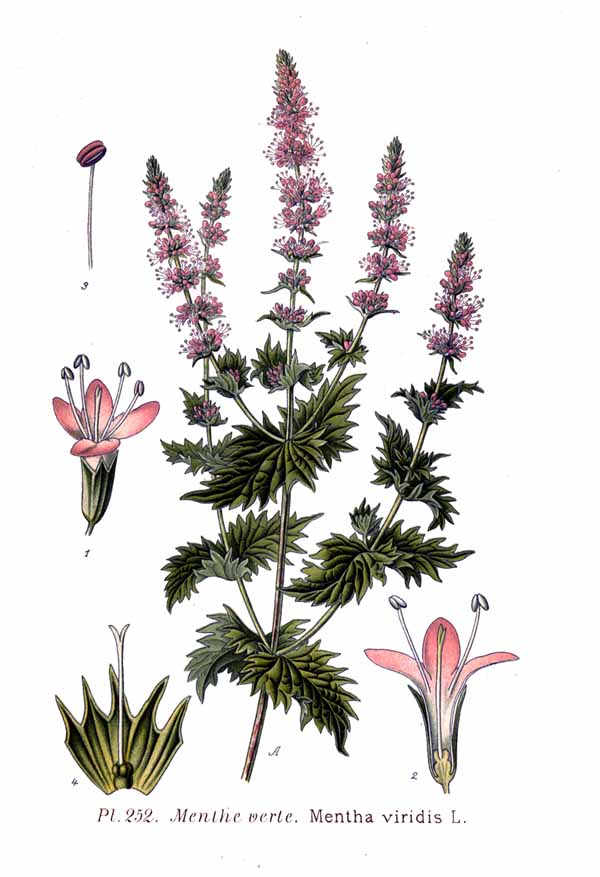
Wikimedia Commons / CC BY-SA
Parts Used
Leaf
Therapeutic Uses
PCOS (hirsutism — clinical trials confirm antiandrogenic effect), IBS, nausea, digestive complaints, oral hygiene, halitosis, upper respiratory congestion. Safer than peppermint for GERD patients.
Herbal Actions
Antiandrogenic, carminative, antispasmodic, antimicrobial, anti-inflammatory, cooling
Active Constituents
L-carvone (55–75%), limonene, 1,8-cineole, β-myrcene, flavonoids (eriocitrin, luteolin), rosmarinic acid
Preparation Methods
☕ Herbal Tea🏺 Tincture⚗️ Essential Oil
Traditional Preparation Notes
| Herbal Tea | 1–2 tsp dried leaf per 250ml, steep 10 min covered, 3x daily |
| Tincture | 2–4 ml (1:5, 45% ethanol), 3x daily |
| Notes | For PCOS/hirsutism: 2 cups spearmint tea daily — RCT showed significant reduction in free testosterone after 30 days. Fresh herb preferred. Does not relax lower esophageal sphincter (safe for GERD, unlike peppermint). |
Safety Information
Safety Rating
✓ Generally Safe
Pregnancy
Safe in Pregnancy
Drug Interactions
None known
Contraindications: Very few contraindications. Essential oil should not be used internally. Avoid therapeutic doses if trying to conceive (antiandrogenic effect).
Side Effects: Extremely well tolerated. Mild GI effects at high doses. Contact sensitization with essential oil possible.