Myrtaceae
Clove
Syzygium aromaticum
⚠ Use with Caution
Caution in Pregnancy
Native to: Maluku Islands (Spice Islands), Indonesia
Also known as: Clove Tree, Caryophyllus aromaticus
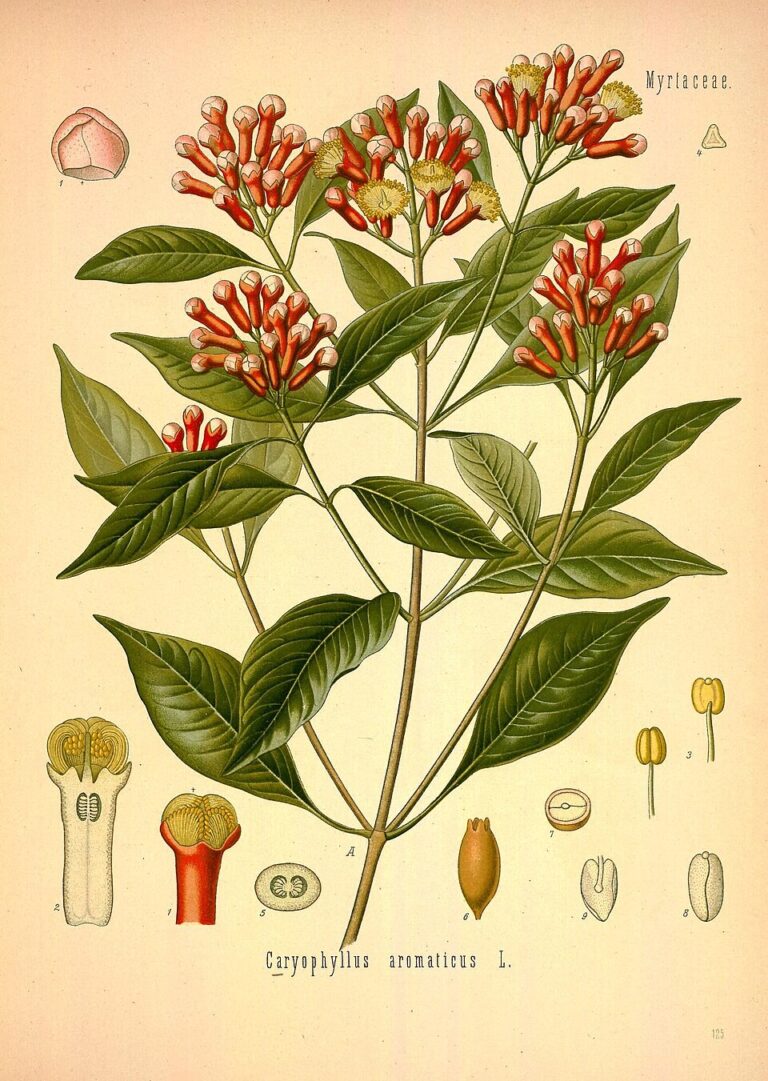
Wikimedia Commons / CC BY-SA
Parts Used
Flower
Therapeutic Uses
Dental pain (topical — clinical standard), oral infections, GI infections, intestinal parasites, fungal infections (Candida), dyspepsia, nausea. Eugenol is the active compound in dental anesthetics.
Herbal Actions
Antimicrobial, antifungal, analgesic (dental), anti-inflammatory, carminative, antioxidant, anthelmintic
Active Constituents
Eugenol (70–95% of essential oil), eugenyl acetate, β-caryophyllene, gallic acid, flavonoids (quercetin, kaempferol)
Preparation Methods
⚗️ Essential Oil☕ Herbal Tea🏺 Tincture
Traditional Preparation Notes
| Herbal Tea | 2–3 whole cloves per 250ml, steep 10 min, 2–3x daily |
| Tincture | 1–2 ml (1:5, 70% ethanol), 3x daily |
| Notes | For dental pain: apply 1–2 drops clove essential oil to cotton and hold on tooth. Internal essential oil only in tiny amounts (1 drop max in honey) — hepatotoxic in large doses. |
Safety Information
Safety Rating
⚠ Use with Caution
Pregnancy
Caution in Pregnancy
Drug Interactions
Possible — consult doctor
Contraindications: Essential oil internally toxic at high doses (liver damage). Avoid with blood thinners (antiplatelet activity of eugenol). Avoid in pregnancy at therapeutic doses.
Side Effects: Mucous membrane irritation from essential oil. Contact sensitization. GI burning at high doses.