Adoxaceae
Elderflower
Sambucus nigra
✓ Generally Safe
Safe in Pregnancy
Native to: Europe, North Africa, Western Asia
Also known as: Elder Flower, Black Elder Blossom
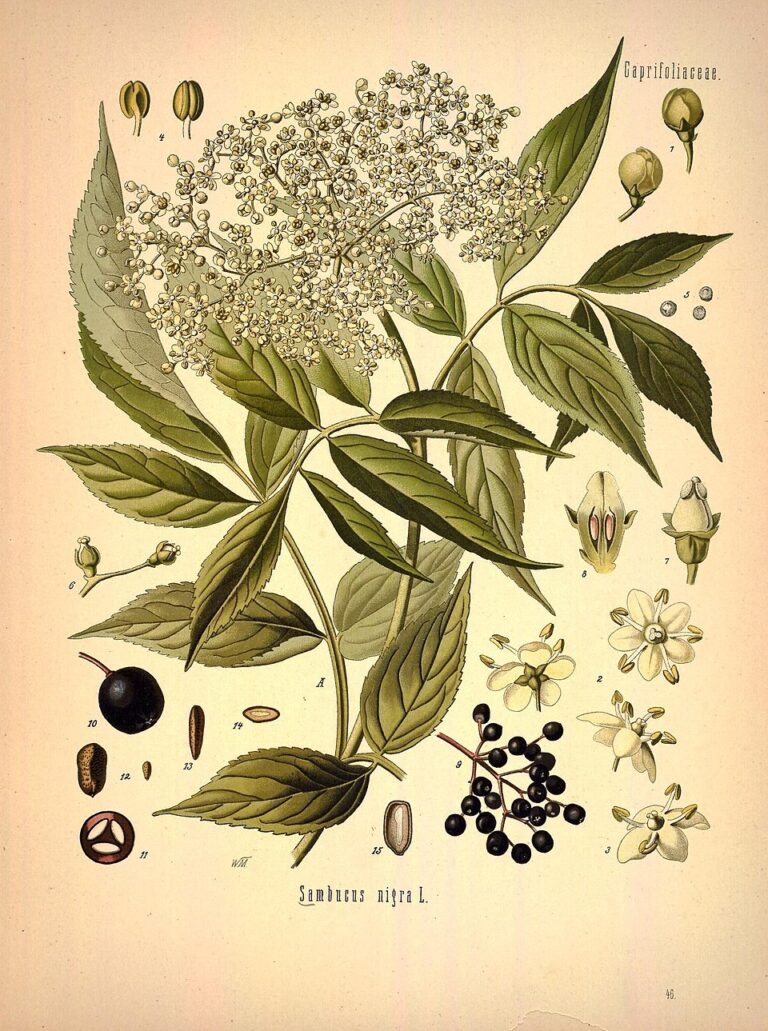
Wikimedia Commons / CC BY-SA
Parts Used
Flower
Therapeutic Uses
Colds and flu (fever management via diaphoresis), sinusitis, hay fever, upper respiratory catarrh, coughs. Flowers complement elderberry's immune-stimulating action with mucosal-clearing effect.
Herbal Actions
Diaphoretic, decongestant, anti-inflammatory, antiviral, expectorant, mild diuretic
Active Constituents
Flavonoids (rutin, isoquercitrin, kaempferol), phenolic acids, volatile oils (nonanal, nerol), mucilage, tannins
Preparation Methods
☕ Herbal Tea🏺 Tincture🍯 Syrup
Traditional Preparation Notes
| Herbal Tea | 2 tsp dried flowers per 250ml, steep 10 min covered, 3–5x daily during acute illness |
| Tincture | 3–5 ml (1:5, 40% ethanol), 3–5x daily |
| Notes | Best combined with peppermint and yarrow for fever management (classic diaphoretic tea). Best taken hot to encourage perspiration. Flowers safe and pleasant — mild enough for children. |
Safety Information
Safety Rating
✓ Generally Safe
Pregnancy
Safe in Pregnancy
Drug Interactions
None known
Contraindications: Raw elder leaves and unripe berries contain toxic cyanogenic glycosides — flowers are safe. Avoid in known allergy.
Side Effects: Extremely rare allergic reactions. Generally very well tolerated even by children and elderly.