Asteraceae
Yarrow
Achillea millefolium
✓ Generally Safe
Avoid in Pregnancy
Native to: Europe, Asia, North America
Also known as: Common Yarrow, Milfoil, Soldier's Woundwort, Nosebleed Plant
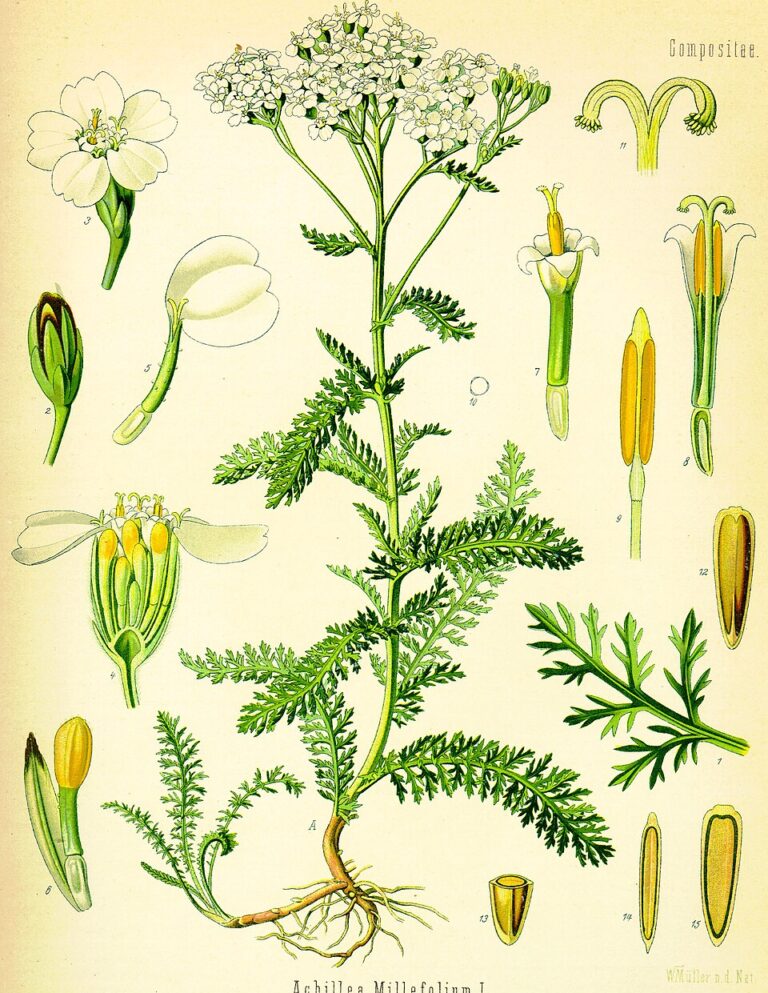
Wikimedia Commons / CC BY-SA
Parts Used
FlowerLeaf
Therapeutic Uses
Wounds and bleeding (topical), fever management (diaphoretic), heavy menstruation, UTIs, hypertension, varicose veins, digestive bitters, colds and flu. One of the most versatile Western herbs — used in virtually every major herbal tradition.
Herbal Actions
Hemostatic, anti-inflammatory, antipyretic, antimicrobial, diaphoretic, antispasmodic, bitter tonic, astringent, emmenagogue
Active Constituents
Sesquiterpene lactones (achillin, achillicin), alkaloids (achilleine, betonicine), flavonoids (luteolin, apigenin), proazulenes (converted to chamazulene), essential oil (camphor, borneol, cineole, azulene)
Preparation Methods
☕ Herbal Tea🏺 Tincture🧴 Salve/Balm🛁 Herbal Bath
Traditional Preparation Notes
| Herbal Tea | 2 tsp dried herb per 250ml, steep 10 min covered, 3x daily |
| Tincture | 2–4 ml (1:5, 25% ethanol), 3x daily |
| Notes | For fever: combine with elderflower and peppermint as classic diaphoretic tea — drink hot. For wounds: fresh crushed leaves applied directly (field first aid). For menorrhagia: take throughout cycle, increase during period. |
Safety Information
Safety Rating
✓ Generally Safe
Pregnancy
Avoid in Pregnancy
Drug Interactions
Possible — consult doctor
Contraindications: Contraindicated in pregnancy (emmenagogue/uterotonic). Avoid in Asteraceae allergy. Caution with anticoagulants (mild antiplatelet activity).
Side Effects: Contact dermatitis (photo-sensitization with essential oil). Rare allergic reactions in Asteraceae-sensitive individuals. Achilleine may cause mild toxicity at very high internal doses.