Juglandaceae
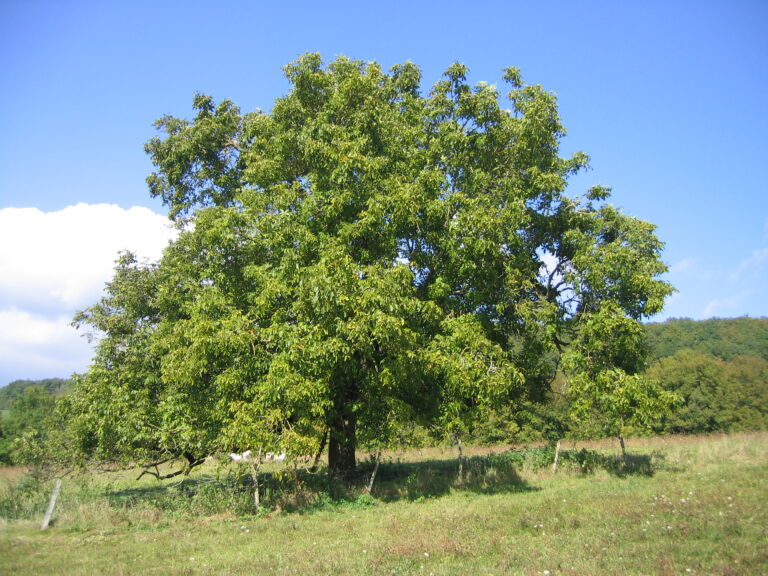
Walnut Leaf
Juglans regia
✓ Generally Safe
Caution in Pregnancy
Native to: Southeast Europe, Central Asia to China
Also known as: Common Walnut Leaf, English Walnut, Persian Walnut
Wikimedia Commons / CC BY-SA
Parts Used
Leaf
Therapeutic Uses
Eczema (topical wash — Commission E approved), fungal skin infections, excessive sweating (antihidrotic), diarrhea, diabetes (hypoglycemic leaf tea).
Herbal Actions
Astringent, antifungal (juglone), anti-inflammatory, hypoglycemic, antidiarrheal, antimicrobial
Active Constituents
Juglandin, naphthoquinones (juglone trace — lower than black walnut), flavonoids (quercetin, kaempferol, naringenin), tannins (gallotannins), essential oil, phenolic acids
Preparation Methods
☕ Herbal Tea🏺 Tincture
Traditional Preparation Notes
| Herbal Tea | 2 tsp dried leaf per 250ml, steep 15 min, 3x daily or as topical wash |
| Tincture | 2–4 ml (1:5, 25% ethanol), 3x daily |
| Notes | Topical for eczema: cooled strong tea as wash or compress 3x daily. Commission E approved for topical skin inflammation. For diabetes: 1g leaf extract daily. Different from black walnut (J. nigra) — lower juglone content. |
Safety Information
Safety Rating
✓ Generally Safe
Pregnancy
Caution in Pregnancy
Drug Interactions
Possible — consult doctor
Contraindications: Caution with antidiabetics (hypoglycemic synergy). Avoid in pregnancy at high doses. Tannins reduce iron absorption.
Side Effects: Reduced iron absorption. Skin staining (topical). GI upset at high internal doses. Generally safe.