
Rosaceae
Tormentil
Potentilla erecta
✓ Generally Safe
Caution in Pregnancy
Native to: Europe, Western Asia
Also known as: Erect Cinquefoil, Bloodroot, Shepherd's Knot, Tormentil Root
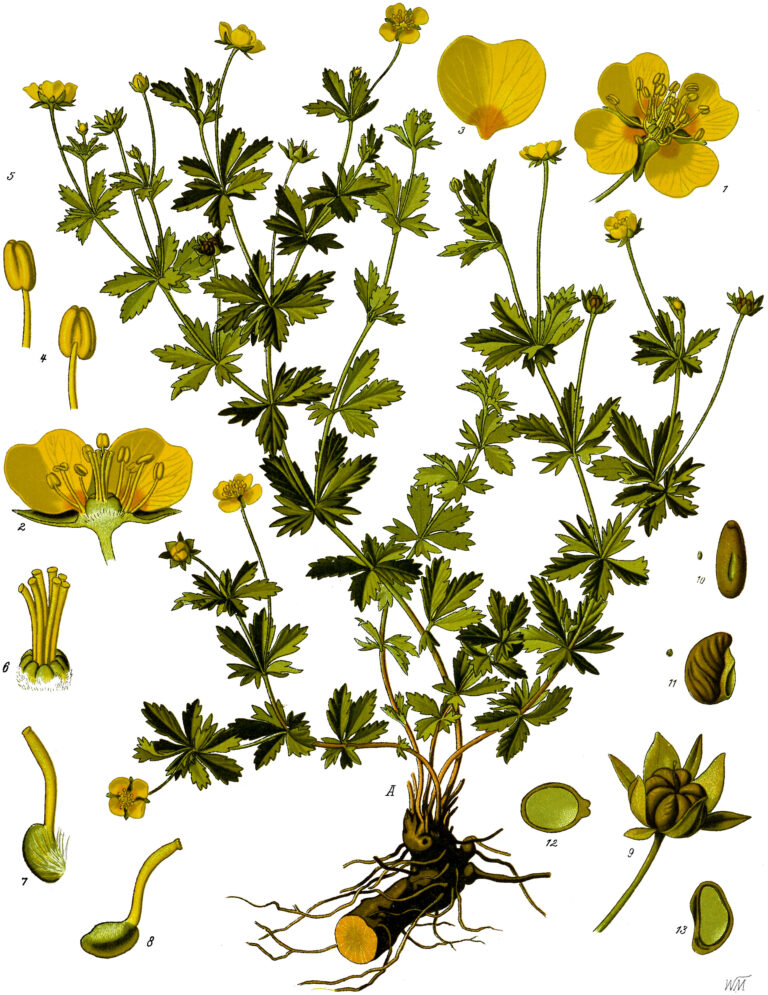
Wikimedia Commons / CC BY-SA
Parts Used
Root
Therapeutic Uses
Diarrhea (one of the strongest astringent herbs — excellent for acute and traveler's diarrhea), IBD (topical rectal enema), oral ulcers (gargle), wound healing (topical), vaginal discharge (douche).
Herbal Actions
Astringent (strong), anti-inflammatory, antimicrobial, vulnerary, antidiarrheal
Active Constituents
Tannins (tormentillin — up to 20%, ellagitannins, catechins), phlobaphenes, tormentillol (triterpene), flavonoids, tormentillic acid
Preparation Methods
☕ Herbal Tea🏺 Tincture🍵 Decoction
Traditional Preparation Notes
| Herbal Tea | 1–2 tsp dried root per 250ml, steep 15 min, 3–5x daily for acute diarrhea |
| Tincture | 2–4 ml (1:5, 40% ethanol), 3–5x daily |
| Notes | One of the most reliable diarrhea herbs — high tannin content immediately astringes gut. For IBD: enema of strong decoction (1:10, 100ml 2x daily). Excellent combined with bilberry for diarrhea. |
Safety Information
Safety Rating
✓ Generally Safe
Pregnancy
Caution in Pregnancy
Drug Interactions
None known
Contraindications: High tannins reduce iron absorption — take separately from iron. Avoid in constipation. Large doses may cause nausea. Avoid pregnancy (high tannin content).
Side Effects: Nausea at high doses. Reduces iron absorption. Constipation with excessive use. Generally very safe at therapeutic doses.