
Caprifoliaceae
Teasel Root
Dipsacus fullonum
✓ Generally Safe
Caution in Pregnancy
Native to: Europe, Asia
Also known as: Common Teasel, Fuller's Teasel, Wild Teasel
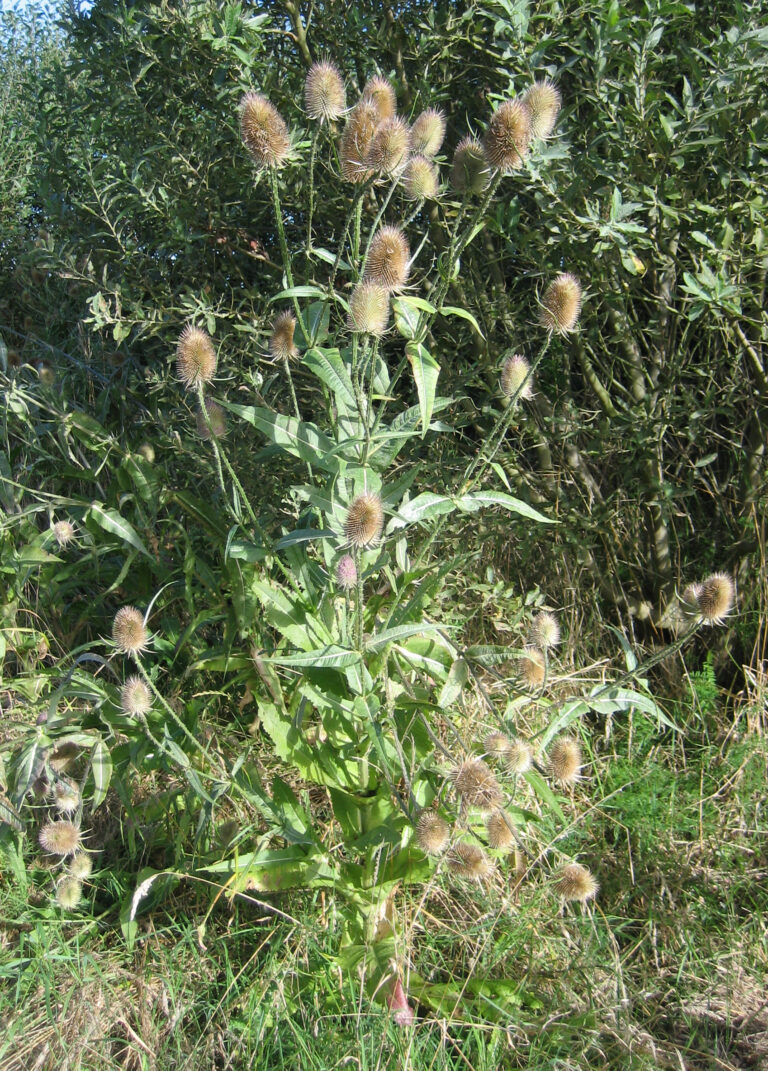
Wikimedia Commons / CC BY-SA
Parts Used
Root
Therapeutic Uses
Lyme disease support (used in Buhner Lyme protocol), liver disorders, rheumatic conditions, joint pain, bone fracture healing (Chinese use), muscle weakness. Growing interest in Lyme disease herbalism.
Herbal Actions
Anti-inflammatory, hepatoprotective, tonic, alterative, antirheumatic, antiviral (anti-Lyme activity in vitro)
Active Constituents
Saponins (dipsacosides, sylvestrosides), iridoids (aucubin, loganin, seco-loganic acid), alkaloids, caffeic acid derivatives, flavonoids
Preparation Methods
🏺 Tincture🍵 Decoction
Traditional Preparation Notes
| Herbal Tea | 2 tsp dried root per 250ml, simmer 15 min, 3x daily |
| Tincture | 3–5 ml (1:5, 40% ethanol), 3x daily |
| Notes | Central herb in Stephen Buhner's Lyme disease protocol (with andrographis and cat's claw). Long-term use (months to years for Lyme). Fresh root more potent. |
Safety Information
Safety Rating
✓ Generally Safe
Pregnancy
Caution in Pregnancy
Drug Interactions
None known
Contraindications: Avoid in pregnancy. No significant drug interactions known. Generally well tolerated.
Side Effects: GI upset. Herxheimer-like reactions when used in Lyme protocol (die-off reactions). Generally well tolerated.