Asparagaceae
Solomon’s Seal
Polygonatum multiflorum
✓ Generally Safe
Caution in Pregnancy
Native to: Europe, Asia
Also known as: Common Solomon's Seal, European Solomon's Seal, Lady's Seal
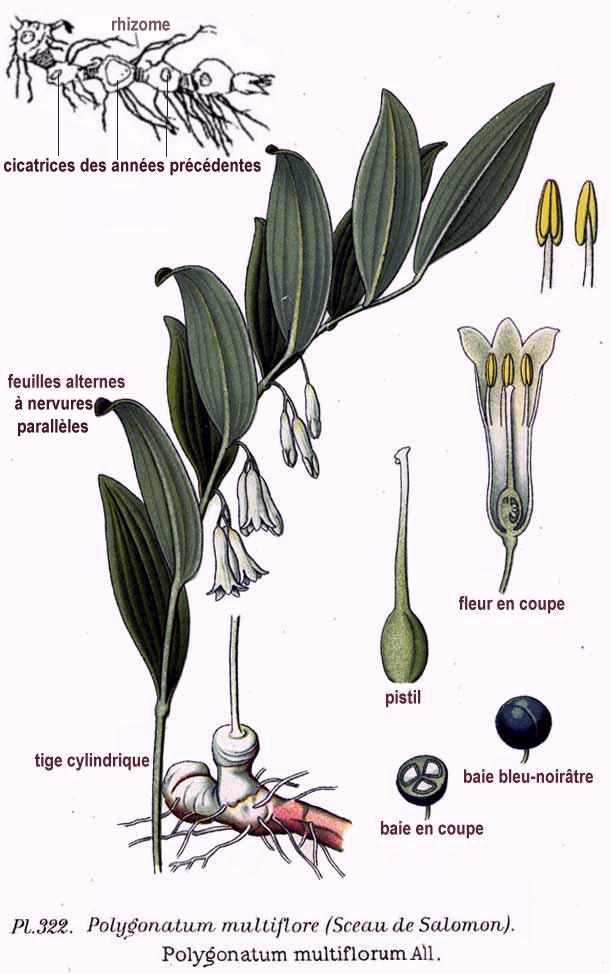
Wikimedia Commons / CC BY-SA
Parts Used
Root
Therapeutic Uses
Tendon and ligament repair, repetitive strain injuries, joint pain, bursitis, arthritis (cartilage support), dry irritated mucous membranes. Specific affinity for connective tissue — premier herb for tendons.
Herbal Actions
Nutritive, demulcent, anti-inflammatory, connective tissue tonic, analgesic (tendons/joints), astringent
Active Constituents
Steroidal saponins (azetidine-2-carboxylic acid, polygonatosides), flavonoids, mucilage, convallarin (related to lily of the valley), asparagine
Preparation Methods
🏺 Tincture🍵 Decoction
Traditional Preparation Notes
| Herbal Tea | 1–2 tsp dried root per 250ml, simmer 15 min, 2–3x daily |
| Tincture | 3–5 ml (1:5, 40% ethanol), 3x daily |
| Notes | Best combined with comfrey (topical) for tendon injuries. Long-term use (3–6 months) for chronic tendon conditions. Topical: simmer root and apply as compress for joint injuries. |
Safety Information
Safety Rating
✓ Generally Safe
Pregnancy
Caution in Pregnancy
Drug Interactions
None known
Contraindications: Berries toxic (not used). Root: avoid high doses in pregnancy. No significant drug interactions.
Side Effects: GI upset at high doses. Berries cause nausea and vomiting (not used medicinally). Root generally well tolerated.