Phytolaccaceae
Poke Root
Phytolacca americana
✗ High Risk
Avoid in Pregnancy
Native to: Eastern North America
Also known as: American Pokeweed, Inkberry, Pokeberry, Pigeon Berry
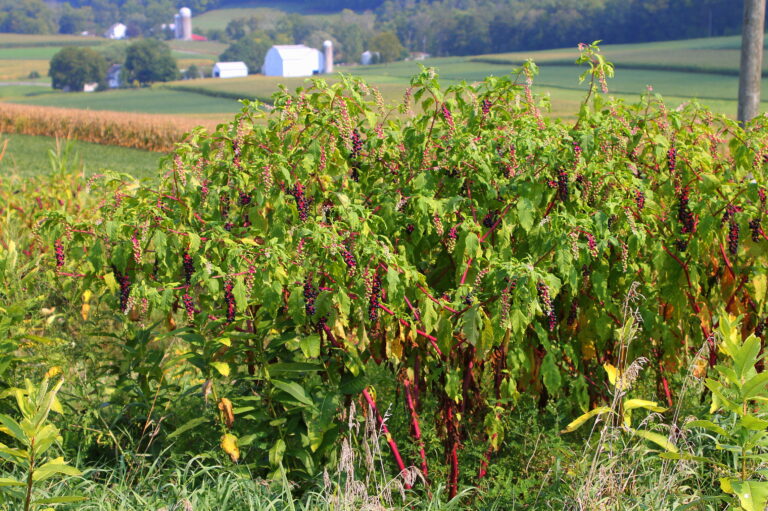
Wikimedia Commons / CC BY-SA
Parts Used
Root
Therapeutic Uses
At homeopathic/low doses: lymphatic stagnation, swollen glands, breast lumps (mastitis — topical). EXTREMELY TOXIC — professional use only. Primarily historical and homeopathic use.
Herbal Actions
Lymphagogue, anti-inflammatory, antiviral, immunostimulant (at VERY low doses)
Active Constituents
Phytolaccatoxin (highly toxic), phytolaccagenin, lectins (PWM — pokeweed mitogen), saponins, alkaloids
Preparation Methods
🏺 Tincture
Traditional Preparation Notes
| Herbal Tea | DO NOT USE — toxic |
| Tincture | LOW HOMEOPATHIC DOSE ONLY: 1–5 drops (not ml) of 1:100 dilution — professional guidance only |
| Notes | HIGHLY TOXIC PLANT — all parts toxic, especially root and berries. Traditional use by experienced practitioners only at very low doses. Causes severe GI hemorrhage, respiratory depression, death. Modern practice avoids internal use. |
Safety Information
Safety Rating
✗ High Risk
Pregnancy
Avoid in Pregnancy
Drug Interactions
None known
Contraindications: EXTREMELY TOXIC — avoid all internal use without expert supervision. Root and berries especially dangerous. Topical: use only poultice of fresh leaves (different toxicity profile).
Side Effects: GI hemorrhage, vomiting, respiratory depression, bradycardia, convulsions, death. Berries attractive to children — extremely dangerous.