Urticaceae
Nettle Root
Urtica dioica
✓ Generally Safe
Caution in Pregnancy
Native to: Europe, Asia, North America, Africa
Also known as: Stinging Nettle Root, Urtica Root
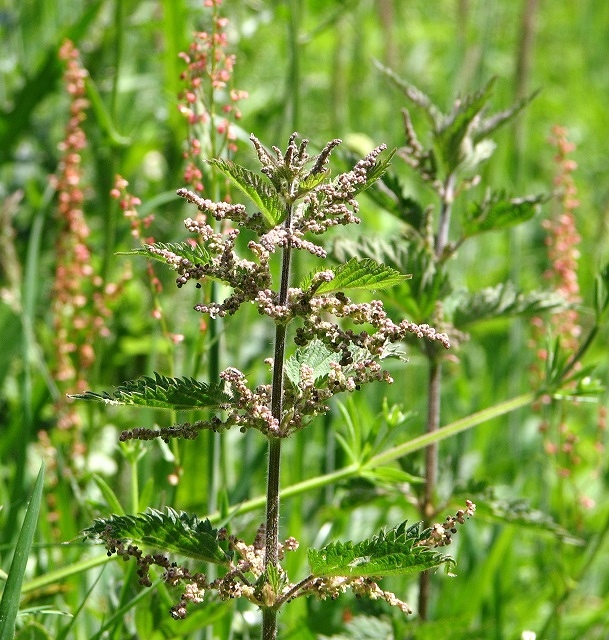
Wikimedia Commons / CC BY-SA
Parts Used
Root
Therapeutic Uses
Benign prostatic hyperplasia (BPH — multiple RCTs, Commission E approved), androgenetic alopecia, PCOS (antiandrogenic), seasonal allergies (different from leaf — root reduces prostate proliferation).
Herbal Actions
Anti-androgenic (5-alpha reductase and aromatase modulation), anti-inflammatory, immunomodulator, diuretic (mild)
Active Constituents
Lectins (UDA — Urtica dioica agglutinin), polysaccharides (glucans), phytosterols (beta-sitosterol), scopoletin, fatty acids, lignans (secoisolariciresinol)
Preparation Methods
💊 Capsule🏺 Tincture🍵 Decoction
Traditional Preparation Notes
| Herbal Tea | 2 tsp dried root per 250ml, simmer 15 min, 2–3x daily |
| Tincture | 4–6 ml (1:5, 40% ethanol), 3x daily |
| Notes | ROOT and LEAF have completely different actions. Root for BPH and antiandrogenic effects. Standardized extract: 120mg 2x daily. Combine with saw palmetto for BPH. Effects in 3–6 months. |
Safety Information
Safety Rating
✓ Generally Safe
Pregnancy
Caution in Pregnancy
Drug Interactions
Possible — consult doctor
Contraindications: Avoid with antidiabetic drugs (hypoglycemic). Caution with anticoagulants. May interact with lithium.
Side Effects: Mild GI upset. Very well tolerated overall.