Apiaceae
Lovage
Levisticum officinale
✓ Generally Safe
Avoid in Pregnancy
Native to: Southwest Asia, Mediterranean
Also known as: Garden Lovage, Love Parsley, Sea Parsley, Bladder Seed
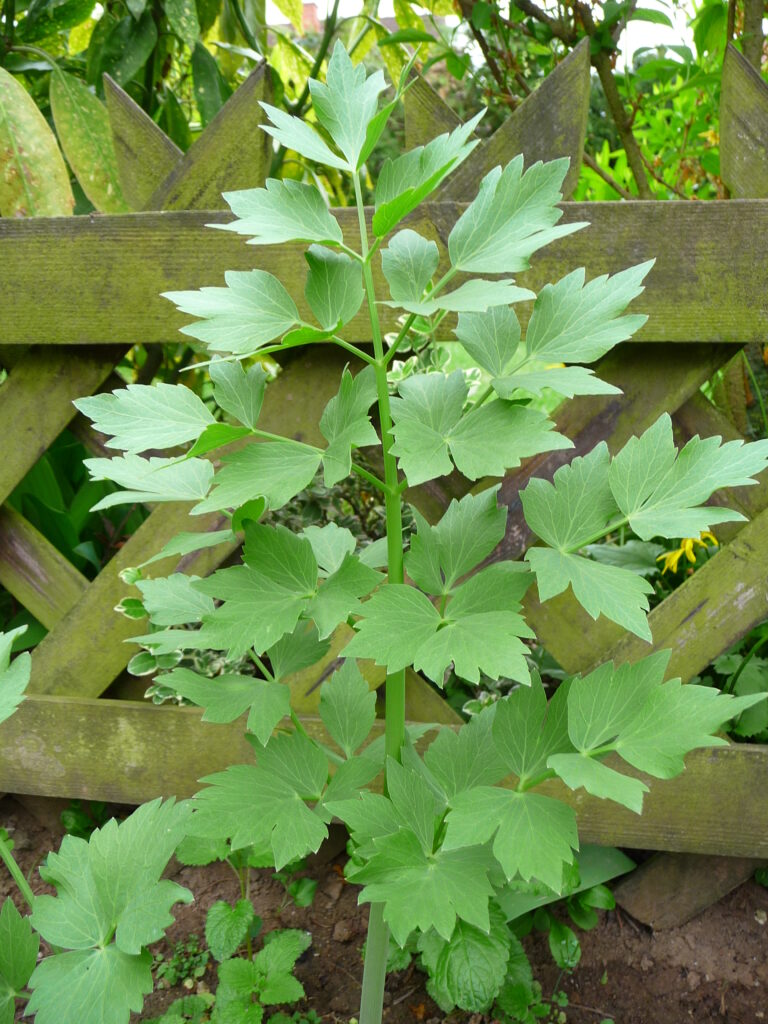
Wikimedia Commons / CC BY-SA
Parts Used
RootLeafSeed
Therapeutic Uses
Urinary tract infections (diuretic and antiseptic), kidney gravel, digestive complaints, respiratory catarrh. Celery-like flavour — excellent culinary herb with medicinal diuretic and carminative properties.
Herbal Actions
Diuretic, carminative, antispasmodic, expectorant, antimicrobial, emmenagogue
Active Constituents
Volatile oil (Z-ligustilide — primary, E-ligustilide, beta-phellandrene, alpha-terpineol), phthalides, coumarins (bergapten, psoralen), flavonoids (quercetin, apigenin), resins
Preparation Methods
☕ Herbal Tea🏺 Tincture
Traditional Preparation Notes
| Herbal Tea | 1–2 tsp dried root or leaf per 250ml, steep 10 min, 3x daily with high water intake |
| Tincture | 2–4 ml (1:5, 45% ethanol), 3x daily |
| Notes | Commission E approved for UTI (root, as diuretic). High fluid intake essential. Culinary use (leaf): safe and adds distinctive flavour. Root more potent than leaf. Combine with couch grass for UTI support. |
Safety Information
Safety Rating
✓ Generally Safe
Pregnancy
Avoid in Pregnancy
Drug Interactions
Possible — consult doctor
Contraindications: Avoid in pregnancy (emmenagogue, uterotonic). Avoid in kidney inflammation. Furanocoumarins: photosensitivity. Caution with diuretics.
Side Effects: Photosensitivity (furanocoumarins). Diuretic effect. GI irritation at high doses. Allergic reactions (Apiaceae).