
Malvaceae
Linden Flower
Tilia cordata
✓ Generally Safe
Safe in Pregnancy
Native to: Europe, Western Asia
Also known as: Small-leaved Lime, Littleleaf Linden, Small-leaved Linden
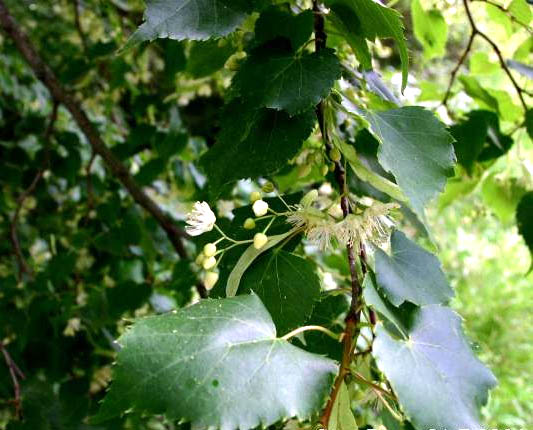
Wikimedia Commons / CC BY-SA
Parts Used
Flower
Therapeutic Uses
Anxiety, insomnia (children's herb), colds and flu (diaphoretic), hypertension (mild), headaches, upper respiratory catarrh. One of the gentlest and most pleasant anxiolytic herbs.
Herbal Actions
Sedative, antispasmodic, diaphoretic, demulcent, hypotensive (mild), nervine
Active Constituents
Mucilage (3%), volatile oil (farnesol, geraniol, 1,8-cineole), flavonoids (quercetin, kaempferol, tiliroside), hydroxycoumarins, phenolic acids, tannins
Preparation Methods
☕ Herbal Tea🏺 Tincture
Traditional Preparation Notes
| Herbal Tea | 2 tsp dried flowers per 250ml, steep 10 min — pleasant honey-like aroma, 3x daily |
| Tincture | 3–5 ml (1:5, 25% ethanol), 3x daily |
| Notes | Excellent children's herb — gentle and tasty. For fever: drink hot to promote diaphoresis. Classic European anxiety and fever tea. Combine with elderflower and peppermint for fever. Combine with chamomile for insomnia in children. |
Safety Information
Safety Rating
✓ Generally Safe
Pregnancy
Safe in Pregnancy
Drug Interactions
None known
Contraindications: Allergic reactions in Malvaceae sensitive individuals. Large quantities: possible cardiac effects (reported but rare). Otherwise very safe.
Side Effects: Rare allergic reactions. Possible cardiac effects at very high doses (reported in elderly). Generally extremely safe.