Ericaceae
Labrador Tea
Rhododendron groenlandicum
⚠ Use with Caution
Caution in Pregnancy
Native to: Northern North America, Greenland
Also known as: Bog Labrador Tea, Marsh Tea, Hudson's Bay Tea, Ledum
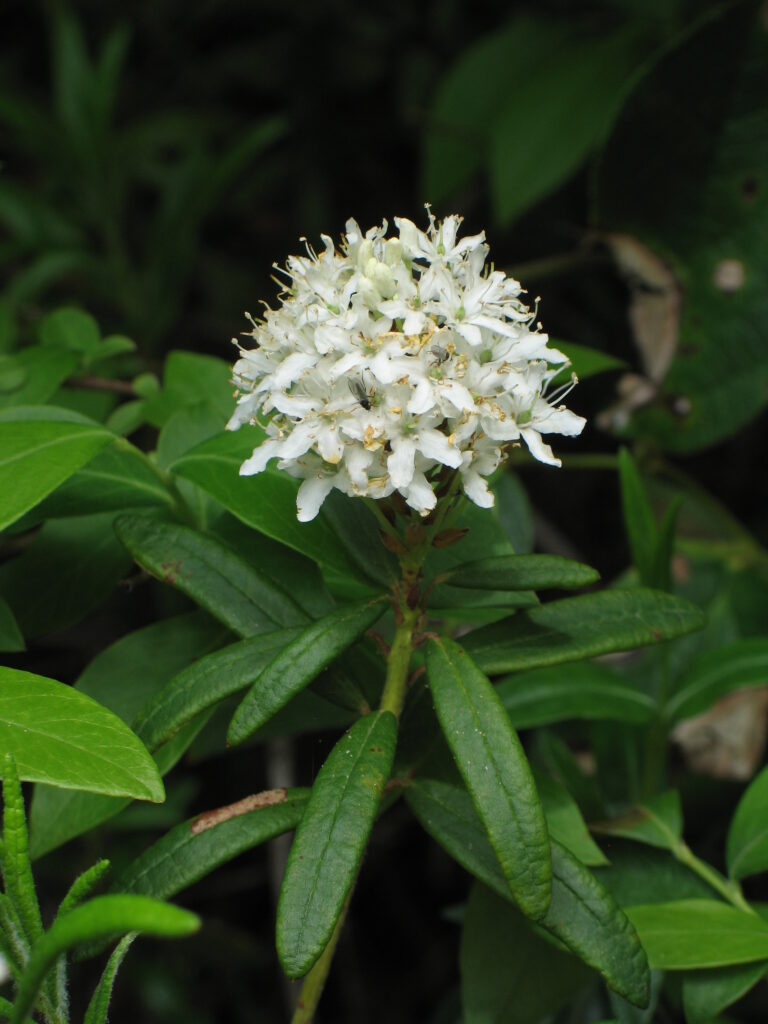
Wikimedia Commons / CC BY-SA
Parts Used
Leaf
Therapeutic Uses
Respiratory catarrh (expectorant), UTI (arbutin), insect repellent (topical). Traditional First Nations beverage — used as regular tea by North American indigenous peoples. Lower ledol than L. palustre.
Herbal Actions
Expectorant, urinary antiseptic, antispasmodic, insect repellent
Active Constituents
Volatile oil (ledol — potentially neurotoxic in excess, palustrol, limonene), flavonoids (quercetin, myricetin), arbutin (urinary antiseptic), tannins, resin acids
Preparation Methods
☕ Herbal Tea🏺 Tincture
Traditional Preparation Notes
| Herbal Tea | 1 tsp dried leaf per 250ml, steep 10 min, 2–3x daily — pleasant aromatic |
| Tincture | 2–3 ml (1:5, 40% ethanol), 2–3x daily |
| Notes | Traditional North American wilderness survival beverage. Lower ledol than European Ledum palustre — safer for regular use. Pleasant aromatic character. Do not boil (concentrates ledol). |
Safety Information
Safety Rating
⚠ Use with Caution
Pregnancy
Caution in Pregnancy
Drug Interactions
None known
Contraindications: Pregnancy. High doses of ledol — neurotoxic. Do not boil. Short courses for therapeutic use.
Side Effects: Ledol toxicity (very high doses). GI irritation. Generally safe at normal tea strength.