
Fabaceae
Jamaican Dogwood
Piscidia piscipula
⚠ Use with Caution
Avoid in Pregnancy
Native to: Caribbean, Central America
Also known as: Fish Poison Tree, West Indian Dogwood, Jamaica Dogwood
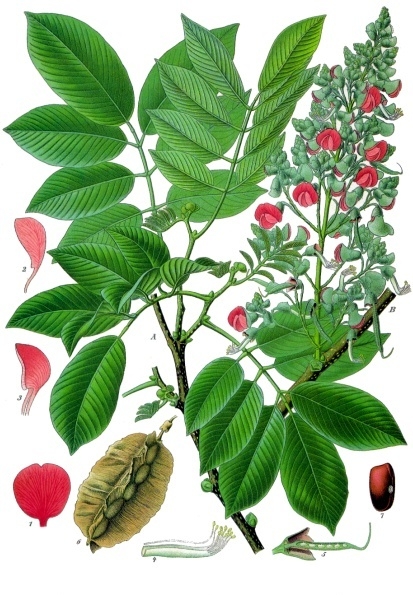
Wikimedia Commons / CC BY-SA
Parts Used
Bark
Therapeutic Uses
Neuralgia, migraine, insomnia with pain, dysmenorrhea, muscle spasms, anxiety with physical tension. Potent analgesic herb — one of the strongest natural pain relievers.
Herbal Actions
Analgesic, sedative, antispasmodic, anti-inflammatory
Active Constituents
Rotenone, ichthynone, piscidic acid (isorotenone), flavonoids, glycosides
Preparation Methods
🏺 Tincture
Traditional Preparation Notes
| Herbal Tea | Not recommended — poor water extraction of actives |
| Tincture | 1–2 ml (1:5, 60% ethanol) — LOW DOSE HERB, 2–3x daily |
| Notes | LOW DOSE — start at 0.5ml and increase. Potent analgesic — respect dosage. Best used with professional guidance. Combine with valerian for insomnia with pain. |
Safety Information
Safety Rating
⚠ Use with Caution
Pregnancy
Avoid in Pregnancy
Drug Interactions
⚠ Known interactions
Contraindications: Avoid in pregnancy. Avoid with CNS depressants (additive). Do not drive after use. Use minimum effective dose. Avoid in liver disease (rotenone).
Side Effects: Strong sedation. Potentiates other sedatives dangerously. GI upset. Liver toxicity at high doses (rotenone).