Solanaceae
Goji Berry
Lycium barbarum
✓ Generally Safe
Caution in Pregnancy
Native to: Northwestern China (Ningxia province)
Also known as: Wolfberry, Chinese Wolfberry, Matrimony Vine, Gouqi
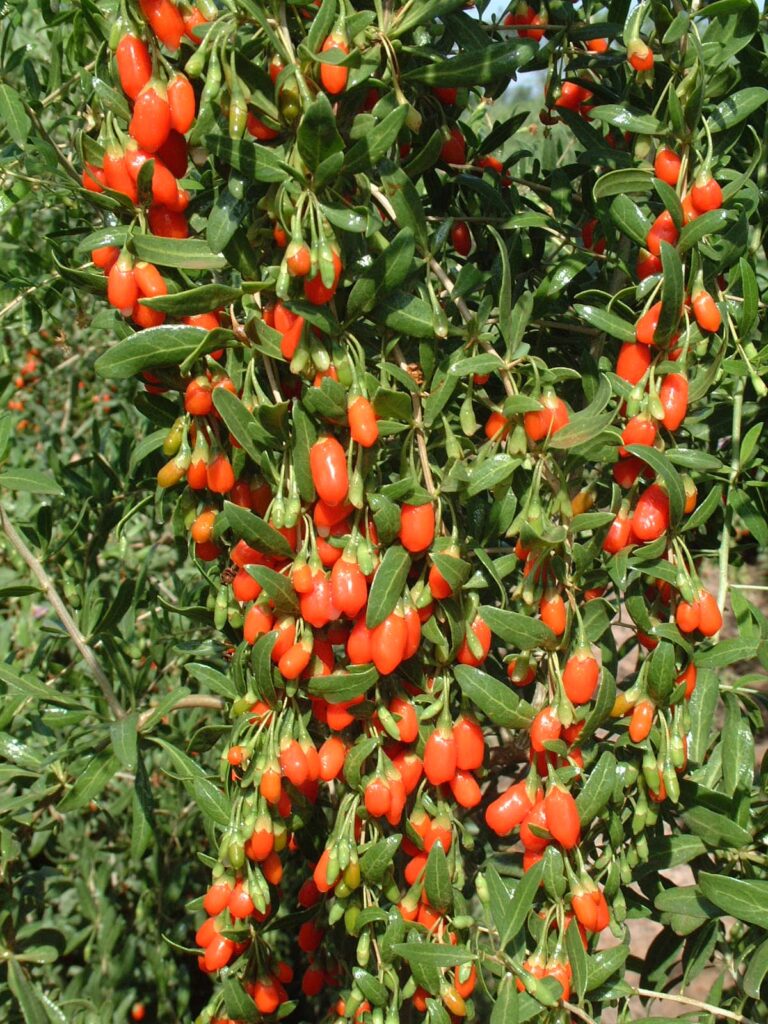
Wikimedia Commons / CC BY-SA
Parts Used
Berry
Therapeutic Uses
Macular degeneration and eye health (zeaxanthin — clinical evidence), immune support, liver protection, cognitive decline, fatigue, hypoglycemia management, cancer adjunct.
Herbal Actions
Immunomodulator (LBP — NK cell and lymphocyte activation), antioxidant, hepatoprotective, vision protective (zeaxanthin), neuroprotective, antidiabetic
Active Constituents
Polysaccharides (LBP — Lycium barbarum polysaccharides, primary active), zeaxanthin (highest fruit source — 330mg/100g dry), beta-carotene, betaine, physalin, amino acids (all 18), vitamins C and B
Preparation Methods
☕ Herbal Tea💊 Capsule🏺 Tincture
Traditional Preparation Notes
| Herbal Tea | 15–30g dried berries steeped in hot water 15 min, 2x daily — pleasant sweet taste |
| Tincture | LBP standardized extract: 150–300mg 2x daily |
| Notes | Standardized LBP (polysaccharides): 150mg 2x daily for immune and hepatic effects. For eyes: combine with lutein. As food: 15–30g dried berries daily. Soak and add to congee, oatmeal, smoothies. Ningxia province berries superior quality. |
Safety Information
Safety Rating
✓ Generally Safe
Pregnancy
Caution in Pregnancy
Drug Interactions
Possible — consult doctor
Contraindications: Possible warfarin interaction (case reports). Caution with antidiabetics. Caution in pregnancy (betaine uterotonic in high amounts).
Side Effects: GI discomfort at high doses. Rare allergic reactions. Very well tolerated generally.