Anacardiaceae
Galla Chinensis
Rhus chinensis
⚠ Use with Caution
Caution in Pregnancy
Native to: China, Japan, Southeast Asia
Also known as: Chinese Gall, Nutgall, Chinese Sumac Gall
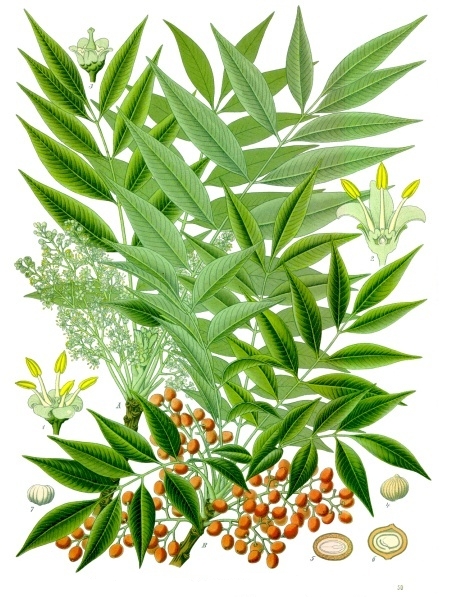
Wikimedia Commons / CC BY-SA
Parts Used
Gall
Therapeutic Uses
Diarrhea and dysentery (extreme astringency), haemorrhoids (topical), excessive sweating, bleeding conditions, skin infections. Very high tannin content.
Herbal Actions
Astringent (most potent natural astringent), antimicrobial, antifungal, antiviral (ellagic acid), haemostatic
Active Constituents
Gallotannins (60–80% — primary, including pentagalloylglucose), gallic acid, ellagic acid, methyl gallate
Preparation Methods
🏺 Tincture☕ Herbal Tea💊 Capsule
Traditional Preparation Notes
| Herbal Tea | 0.5 tsp per 250ml, steep 10 min — intensely astringent, 2–3x daily |
| Tincture | 1–2 ml (1:5, 40% ethanol), 3x daily |
| Notes | Extremely astringent — low doses effective. For haemorrhoids: diluted decoction as sitz bath. For diarrhea: small doses combined with carob or blackberry leaf. Reduces drug absorption — take separately from medications. |
Safety Information
Safety Rating
⚠ Use with Caution
Pregnancy
Caution in Pregnancy
Drug Interactions
Possible — consult doctor
Contraindications: High tannin reduces drug absorption. Liver concerns with very long-term high-dose use. Constipation with excess use. Caution in pregnancy.
Side Effects: Constipation. Reduced drug absorption. Liver concerns with excessive long-term use. Nausea at high doses.