Asteraceae
Feverfew
Tanacetum parthenium
⚠ Use with Caution
Avoid in Pregnancy
Native to: Southeastern Europe, Western Asia
Also known as: Wild Chamomile, Midsummer Daisy, Bachelor's Buttons
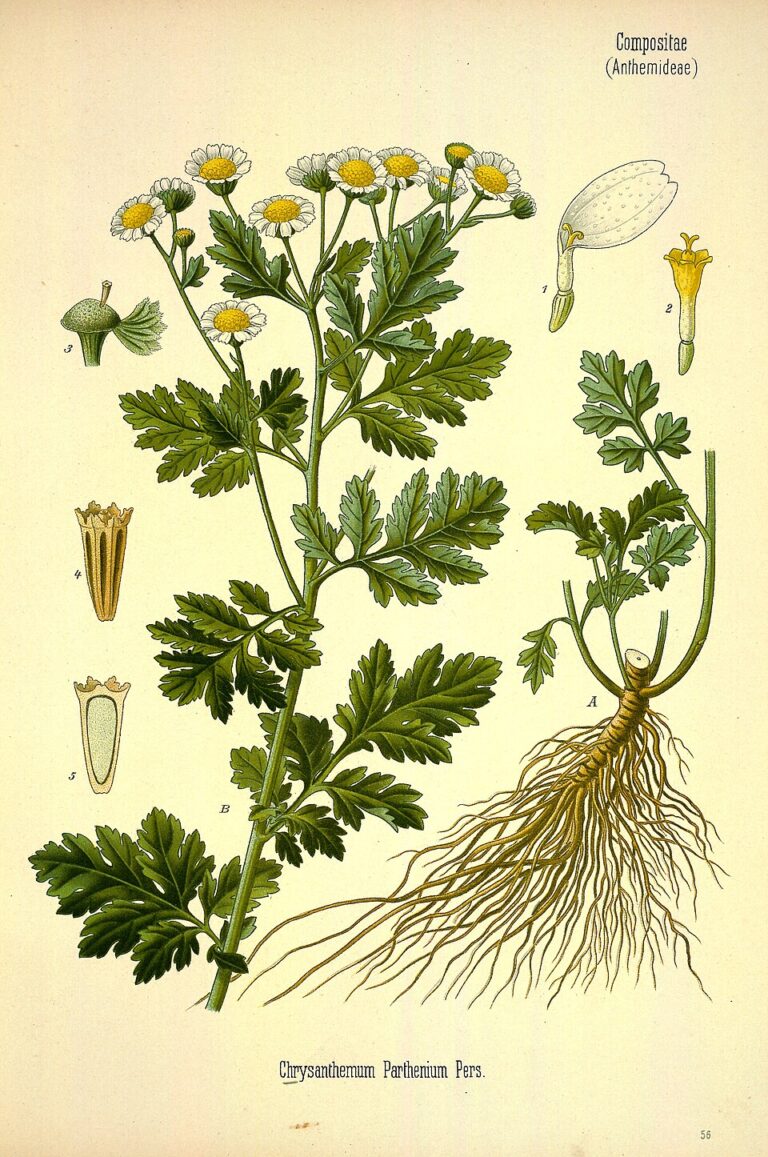
Wikimedia Commons / CC BY-SA
Parts Used
Leaf
Therapeutic Uses
Migraine prevention (multiple RCTs confirm 24% reduction in frequency), rheumatoid arthritis, fever, dysmenorrhea, cluster headaches. Parthenolide inhibits platelet aggregation and serotonin release from platelets.
Herbal Actions
Antimigraine, anti-inflammatory, antispasmodic, emmenagogue, platelet aggregation inhibitor
Active Constituents
Sesquiterpene lactones (parthenolide 0.1–0.9%), volatile oils (camphor, borneol), flavonoids (luteolin, apigenin), tannins
Preparation Methods
☕ Herbal Tea🏺 Tincture💊 Capsule
Traditional Preparation Notes
| Herbal Tea | 3–4 fresh leaves daily (bitter) or 1 tsp dried herb per 250ml, steep 10 min |
| Tincture | 2–4 ml (1:5, 60% ethanol), 2–3x daily |
| Notes | For migraine prevention: must be taken DAILY for minimum 3 months to assess efficacy. Standardized extract (0.2% parthenolide): 50–100mg daily. Fresh leaf superior to dried. Do NOT stop abruptly — rebound headaches. |
Safety Information
Safety Rating
⚠ Use with Caution
Pregnancy
Avoid in Pregnancy
Drug Interactions
⚠ Known interactions
Contraindications: Contraindicated in pregnancy (uterine stimulant). Avoid with blood thinners, NSAIDs, antiplatelet drugs. Avoid in Asteraceae allergy.
Side Effects: Mouth ulcers (especially fresh leaf), GI discomfort, heartburn. Post-feverfew syndrome on abrupt discontinuation (rebound headaches, anxiety).