
Lamiaceae
Catnip
Nepeta cataria
✓ Generally Safe
Caution in Pregnancy
Native to: Southern and Eastern Europe, Central Asia
Also known as: Catmint, Catnep, Field Balm, Catswort
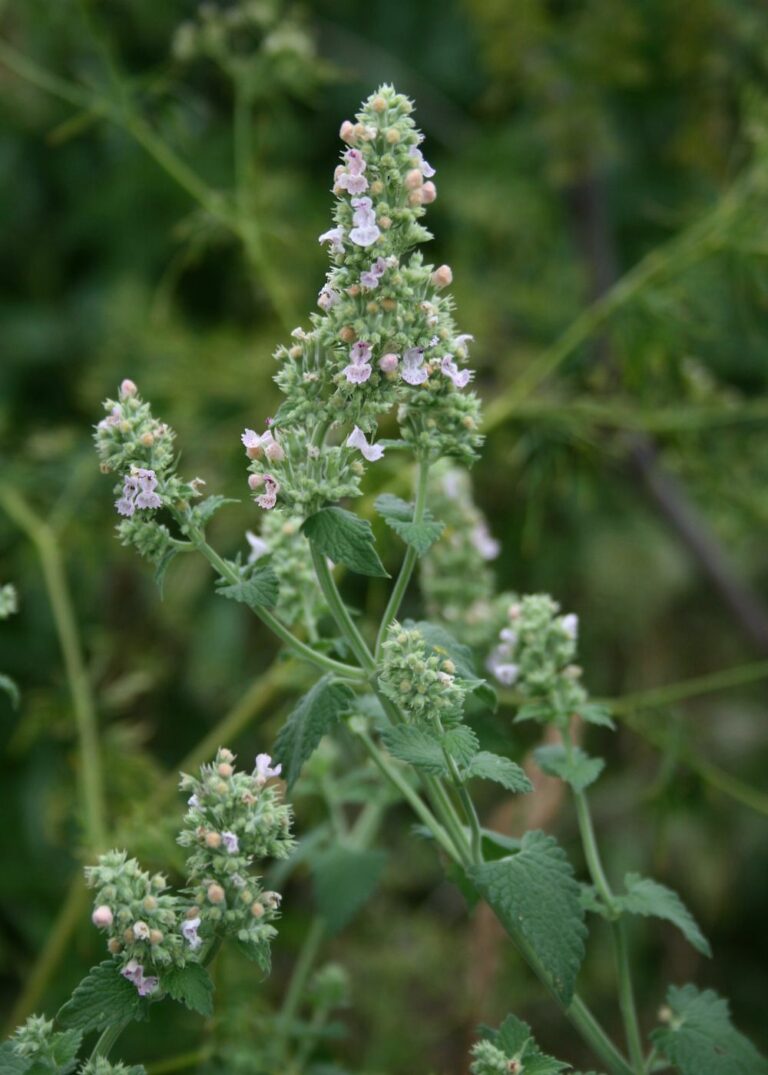
Wikimedia Commons / CC BY-SA
Parts Used
LeafFlower
Therapeutic Uses
Infantile colic, childhood fevers (diaphoretic — safe for children), anxiety, insomnia, IBS, flatulence, menstrual cramps. Excellent gentle children's herb — safe for infants.
Herbal Actions
Carminative, antispasmodic, diaphoretic, nervine, mild sedative, antidiarrheal
Active Constituents
Iridoids (nepetalactones — cat attractant but sedative for humans), terpenes, flavonoids (luteolin, apigenin), tannins, volatile oils
Preparation Methods
☕ Herbal Tea🏺 Tincture
Traditional Preparation Notes
| Herbal Tea | 1–2 tsp dried herb per 250ml, steep 10 min covered, 3x daily |
| Tincture | 2–4 ml (1:5, 40% ethanol), 3x daily |
| Notes | For infantile colic: 1 tsp weak tea in bottle. For children's fever: warm tea promotes perspiration. Fresh herb more potent than dried (nepetalactones volatile). Good flavored with honey. |
Safety Information
Safety Rating
✓ Generally Safe
Pregnancy
Caution in Pregnancy
Drug Interactions
None known
Contraindications: Avoid large doses in pregnancy (emmenagogue). Generally one of the safest herbs available. No significant contraindications at normal doses.
Side Effects: Mild headache at very high doses. Sedation. Paradoxical excitation in rare cases. Generally extremely well tolerated.