Rhamnaceae
Alder Buckthorn
Rhamnus frangula
⚠ Use with Caution
Avoid in Pregnancy
Native to: Europe, Western Siberia
Also known as: Alder Buckthorn, Breaking Buckthorn, Arrow Wood, Black Alder
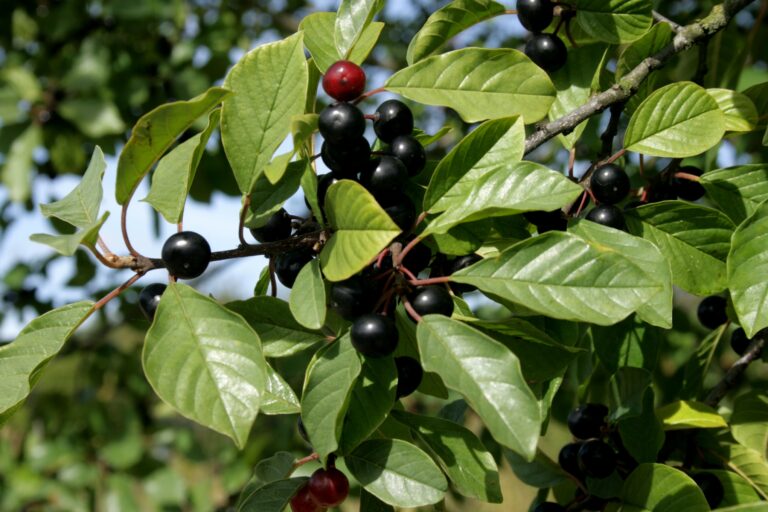
Wikimedia Commons / CC BY-SA
Parts Used
Bark
Therapeutic Uses
Constipation (gentle stimulant laxative — Commission E approved), biliary sluggishness, haemorrhoids (anal fissures — softens stool). Bark must be aged 1+ year or heat-treated to reduce harsh anthranoids.
Herbal Actions
Stimulant laxative (milder than senna), antispasmodic, cholagogue
Active Constituents
Anthraquinone glycosides (frangulin A and B, glucofrangulin A and B — primary), emodin, chrysophanol, tannins
Preparation Methods
💊 Capsule☕ Herbal Tea🏺 Tincture
Traditional Preparation Notes
| Herbal Tea | 1 tsp dried bark (aged) per 250ml, steep 10 min, take at night |
| Tincture | 2–4 ml (1:5, 25% ethanol, aged bark), once at night |
| Notes | MUST use aged (minimum 1 year old) or heat-treated bark — fresh bark causes violent vomiting and colic. Maximum 2-week continuous use. Take with large amounts of water. |
Safety Information
Safety Rating
⚠ Use with Caution
Pregnancy
Avoid in Pregnancy
Drug Interactions
Possible — consult doctor
Contraindications: Fresh bark toxic (must age minimum 1 year or heat-treat). Avoid in pregnancy, IBD, appendicitis. Maximum 2 weeks. Avoid with cardiac glycosides (hypokalemia risk).
Side Effects: Abdominal cramping. Electrolyte imbalance with long-term use. Yellow/brown urine (normal). Fresh bark: violent cathartic.