Asteraceae
Chicory Root
Cichorium intybus
✓ Generally Safe
Caution in Pregnancy
Native to: Europe, Western Asia, North Africa
Also known as: Common Chicory, Succory, Blue Daisy, Coffeeweed
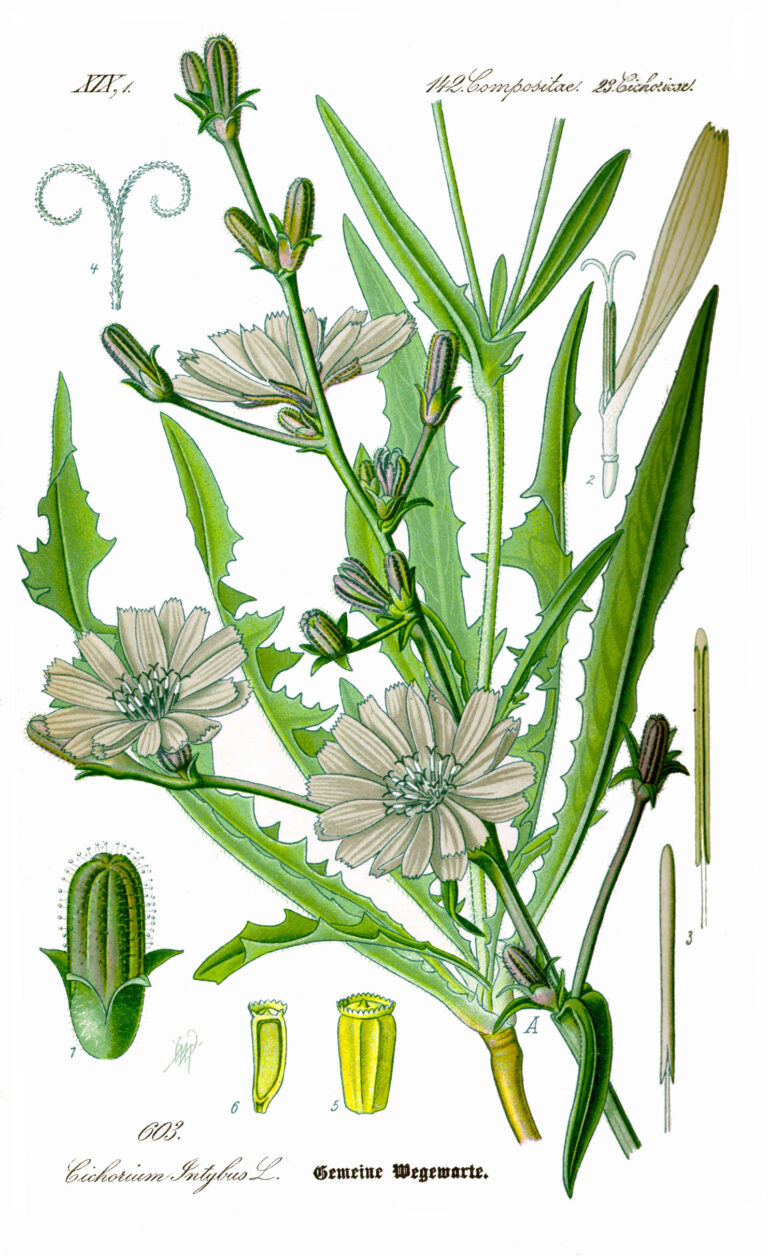
Wikimedia Commons / CC BY-SA
Parts Used
RootLeaf
Therapeutic Uses
Digestive complaints (bitter tonic), liver and gallbladder support, type 2 diabetes (inulin reduces glycemic index), gut health (prebiotic), constipation, metabolic syndrome.
Herbal Actions
Prebiotic (inulin fermented by Bifidobacterium), cholagogue, bitter tonic, hepatoprotective, anti-inflammatory, antidiabetic, diuretic
Active Constituents
Inulin (15–41% of root dry weight — prebiotic fiber), chicoric acid, sesquiterpene lactones (lactucopicrin, lactucin — bitter), flavonoids (quercetin, luteolin), chlorogenic acid, minerals (potassium, calcium)
Preparation Methods
☕ Herbal Tea🍵 Decoction💊 Capsule
Traditional Preparation Notes
| Herbal Tea | 2 tsp dried root per 250ml, simmer 10 min, 3x daily before meals — coffee substitute |
| Tincture | 3–5 ml (1:5, 40% ethanol), 3x daily before meals |
| Notes | Classic coffee substitute (roasted chicory). Inulin content highest in fall harvest. Prebiotic dose: 5–10g inulin daily. For liver support: fresh root juice 30ml 2x daily. Traditional European digestive bitter. |
Safety Information
Safety Rating
✓ Generally Safe
Pregnancy
Caution in Pregnancy
Drug Interactions
Possible — consult doctor
Contraindications: Asteraceae allergy. Large amounts in pregnancy (emmenagogue). Caution with antidiabetics (additive blood sugar lowering). Gallstones — caution.
Side Effects: Gas and bloating (inulin fermentation). GI upset at high doses. Rare allergic reactions. Generally very well tolerated.