Araliaceae
Panax Notoginseng
Panax notoginseng
⚠ Use with Caution
Avoid in Pregnancy
Native to: Yunnan, China
Also known as: Tien Chi Ginseng, San Qi, Notoginseng, Pseudoginseng
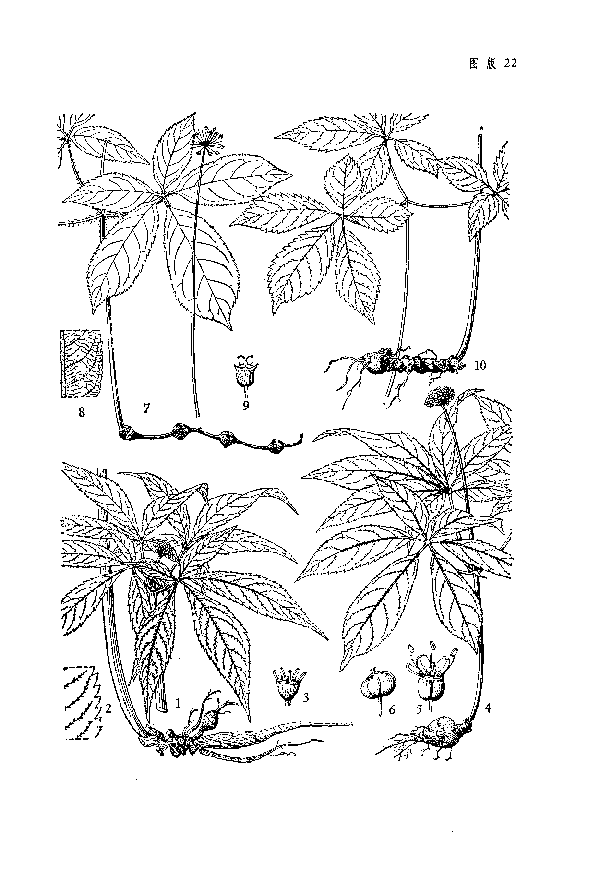
Wikimedia Commons / CC BY-SA
Parts Used
Root
Therapeutic Uses
Bleeding disorders (traumatic and internal — dencichine activates platelets), coronary artery disease (vasodilatory), angina pectoris, traumatic injury, post-surgical healing. Most specific herb for stopping bleeding.
Herbal Actions
Haemostatic (dencichine — most potent plant haemostatic known), cardiovascular protective (angina, stroke), anti-inflammatory, analgesic
Active Constituents
Notoginsenosides (Rb1, Rd, Re, Rg1 — similar but distinct from Panax ginseng), dencichine (haemostatic amino acid), flavonoids, phytosterols
Preparation Methods
💊 Capsule🏺 Tincture🍵 Decoction
Traditional Preparation Notes
| Herbal Tea | 3–9g dried root powder simmered 30 min in 500ml, 2x daily |
| Tincture | 3–5 ml (1:5, 40% ethanol), 2–3x daily |
| Notes | For acute bleeding: 1–3g powder in water immediately. Yunnan Paiyao (patent formula) contains notoginseng — widely used for injuries. For cardiovascular: 500mg standardized extract 2x daily long-term. Powder applied topically to stop external bleeding. |
Safety Information
Safety Rating
⚠ Use with Caution
Pregnancy
Avoid in Pregnancy
Drug Interactions
⚠ Known interactions
Contraindications: Avoid in pregnancy (haemostatic can affect placental circulation). Avoid with anticoagulants. Caution before surgery.
Side Effects: GI upset. Rash. Nausea. Haemostatic: may cause thrombosis at very high doses.