Myristicaceae
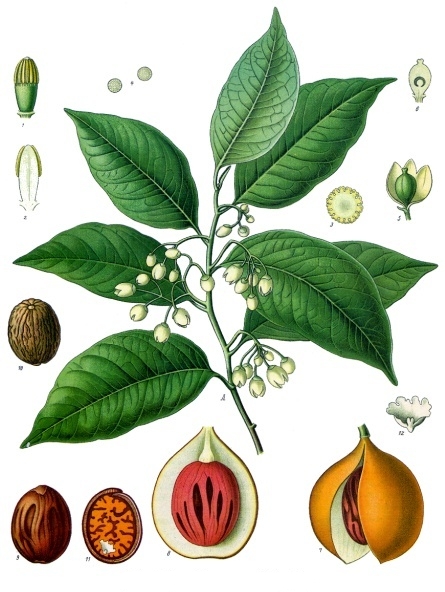
Nutmeg
Myristica fragrans
⚠ Use with Caution
Caution in Pregnancy
Native to: Banda Islands, Indonesia (Maluku)
Also known as: Common Nutmeg, True Nutmeg, Fragrant Nutmeg
Wikimedia Commons / CC BY-SA
Parts Used
Seed
Therapeutic Uses
Digestive complaints (flatulence, dyspepsia, nausea), diarrhea, culinary use. TOXIC at high doses — hallucinogenic and dangerous. Culinary amounts safe and effective.
Herbal Actions
Carminative, antispasmodic, digestive stimulant, warming, narcotic (toxic doses — avoid)
Active Constituents
Volatile oil (myristicin 10–13% — hallucinogenic at toxic doses, elemicin, safrole, alpha-pinene), fixed oil (nutmeg butter — trimyristin 75%), isoeugenol, eugenol, terpenes
Preparation Methods
💊 Capsule☕ Herbal Tea
Traditional Preparation Notes
| Herbal Tea | Pinch of grated nutmeg in warm milk — culinary amounts only |
| Tincture | NOT as tincture — toxic. Culinary use only. |
| Notes | CULINARY AMOUNTS ONLY — toxic dose is 5–20g (2–8 tsp). Myristicin hallucinogenic at toxic doses — accidental poisonings documented. Cooking amount (pinch) safe and carminative. As digestive spice in recipes — safe and effective. |
Safety Information
Safety Rating
⚠ Use with Caution
Pregnancy
Caution in Pregnancy
Drug Interactions
None known
Contraindications: More than 1–2 tsp causes toxicity. Avoid in pregnancy at high doses (possible abortifacient). Culinary amounts safe.
Side Effects: Toxicity at 5g+ (myristicin): hallucinations, tachycardia, flushing, nausea. Cooking amounts: very safe.