
Asteraceae
Mugwort
Artemisia vulgaris
⚠ Use with Caution
Avoid in Pregnancy
Native to: Europe, Asia, North Africa
Also known as: Common Mugwort, Felon Herb, Chrysanthemum Weed, Wild Wormwood
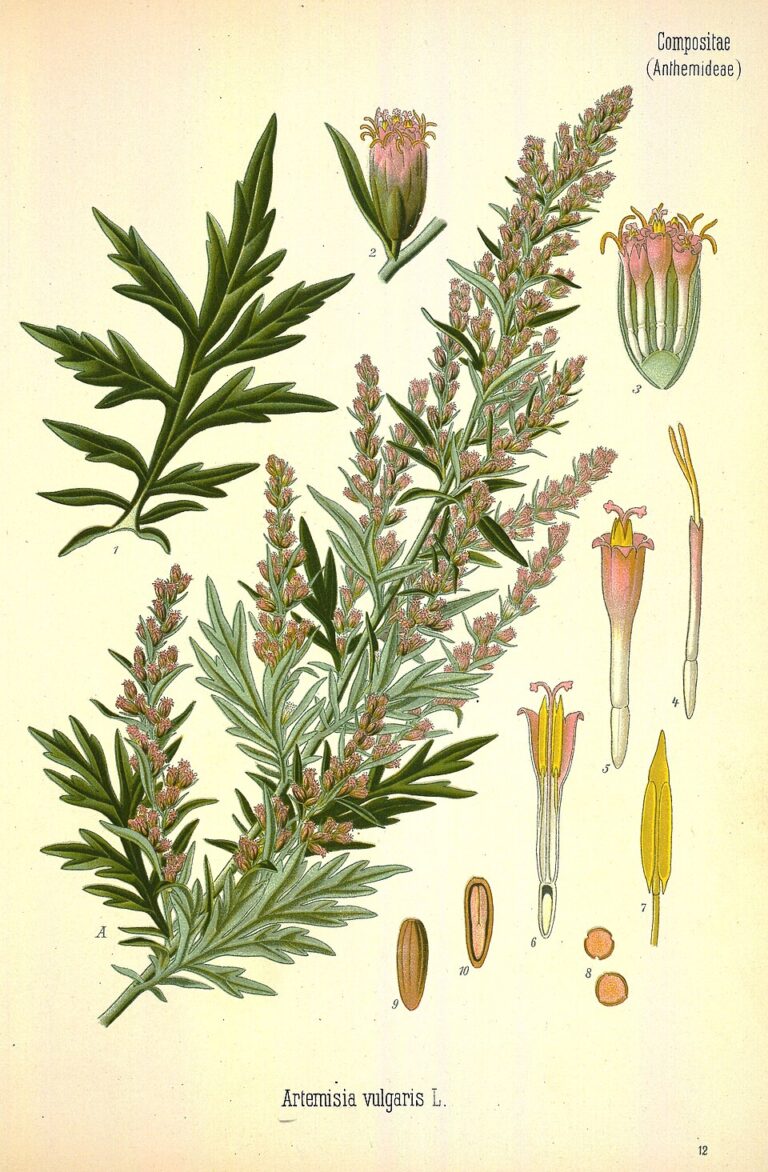
Wikimedia Commons / CC BY-SA
Parts Used
LeafRoot
Therapeutic Uses
Menstrual irregularities (emmenagogue), digestive complaints, nervous exhaustion, moxa (TCM — heat therapy with dried mugwort), insomnia (pillow stuffing — traditional), intestinal worms.
Herbal Actions
Emmenagogue, bitter tonic, nervine, digestive stimulant, anthelmintic, antifungal
Active Constituents
Volatile oil (camphor, borneol, 1,8-cineole, thujone), sesquiterpene lactones (artabsin, absinthin), flavonoids (luteolin, quercetin), tannins, coumarins
Preparation Methods
🏺 Tincture☕ Herbal TeaMoxa
Traditional Preparation Notes
| Herbal Tea | 1–2 tsp dried herb per 250ml, steep 10 min, 2–3x daily |
| Tincture | 2–4 ml (1:5, 45% ethanol), 2–3x daily |
| Notes | Moxa (moxibustion): dried mugwort burned over acupuncture points — traditional Chinese medicine. Bitter tonic for digestive use. Pillow stuffing for vivid dreams (traditional). Thujone content — short courses only. |
Safety Information
Safety Rating
⚠ Use with Caution
Pregnancy
Avoid in Pregnancy
Drug Interactions
None known
Contraindications: Contraindicated in pregnancy (strong emmenagogue/abortifacient). Avoid in epilepsy (thujone). Short-term use. Asteraceae allergy.
Side Effects: Allergic reactions (high allergenicity — major allergy plant). Uterine stimulation. Thujone toxicity with long-term high use.