Fabaceae
Mimosa Bark
Albizia julibrissin
✓ Generally Safe
Caution in Pregnancy
Native to: Southwestern Asia, China
Also known as: Persian Silk Tree, Pink Silk Tree, He Huan Pi
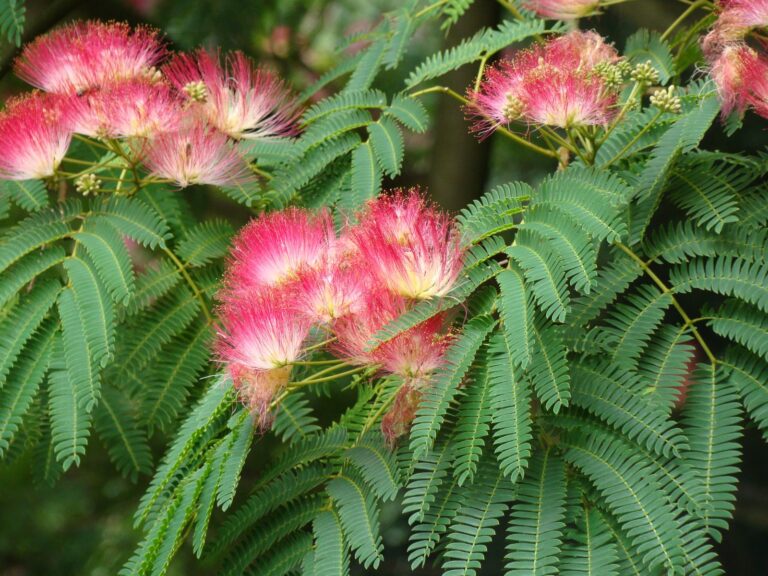
Wikimedia Commons / CC BY-SA
Parts Used
BarkFlower
Therapeutic Uses
Anxiety, depression, insomnia, grief and emotional pain (TCM — 'collective happiness bark'), PTSD, irritability. Traditional Chinese 'happiness herb' — calms spirit (Shen) in TCM.
Herbal Actions
Anxiolytic, antidepressant, sedative, nerve tonic, anti-inflammatory
Active Constituents
Saponins (julibrosides), flavonoids (quercetin, isoquercetin), alkaloids, tannins, terpenoids
Preparation Methods
🏺 Tincture🍵 Decoction💊 Capsule
Traditional Preparation Notes
| Herbal Tea | 6–12g dried bark simmered 30 min in 500ml, 2x daily |
| Tincture | 3–5 ml (1:5, 40% ethanol), 2–3x daily |
| Notes | Bark and flower both anxiolytic. Flower gentler — pleasant for tea. Bark more potent for deeper emotional conditions. Combine with skullcap and passionflower for anxiety. Chinese formula He Huan Pi Tang for grief. |
Safety Information
Safety Rating
✓ Generally Safe
Pregnancy
Caution in Pregnancy
Drug Interactions
Possible — consult doctor
Contraindications: Caution with CNS depressants. Avoid in pregnancy (insufficient safety data). Generally safe.
Side Effects: Mild sedation. GI upset. Very well tolerated generally.