
Boraginaceae
Lungwort
Pulmonaria officinalis
⚠ Use with Caution
Avoid in Pregnancy
Native to: Europe
Also known as: Common Lungwort, Spotted Dog, Soldiers and Sailors, Jerusalem Cowslip
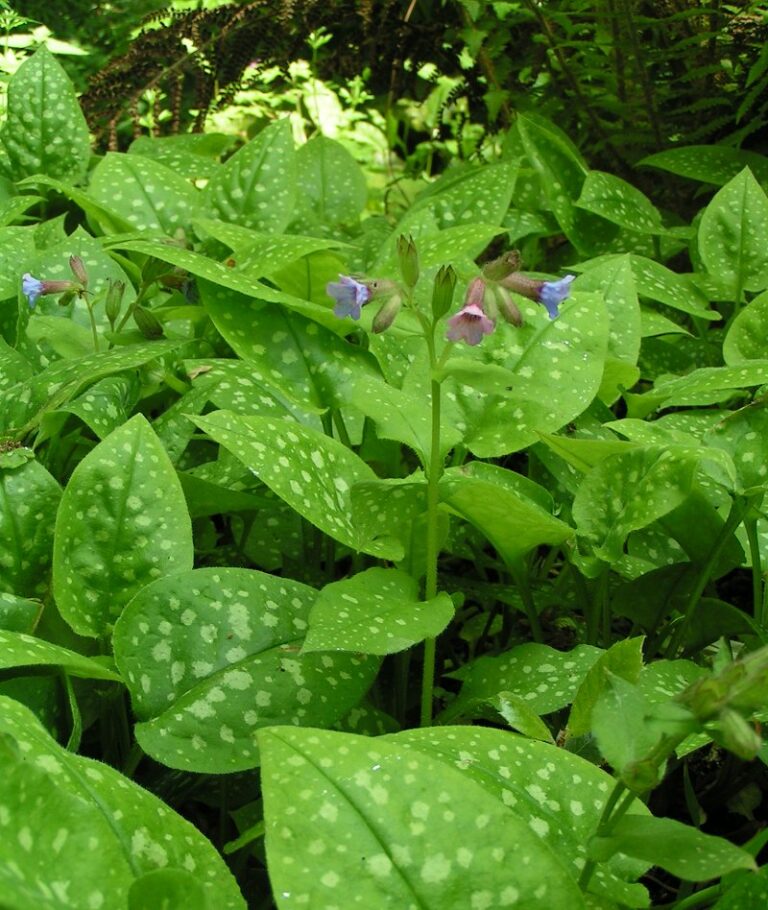
Wikimedia Commons / CC BY-SA
Parts Used
LeafFlower
Therapeutic Uses
Respiratory catarrh, bronchitis, dry cough, TB adjunct (historical), pulmonary bleeding. Doctrine of signatures: spotted lung-shaped leaves — historically used for lung conditions. Allantoin wound healing.
Herbal Actions
Expectorant, demulcent, astringent, anti-inflammatory, vulnerary
Active Constituents
Mucilage, tannins, silica, flavonoids (quercetin, luteolin), allantoin, saponins, pyrrolizidine alkaloids (trace — intermedine, lycopsamine)
Preparation Methods
☕ Herbal Tea🏺 Tincture
Traditional Preparation Notes
| Herbal Tea | 2 tsp dried herb per 250ml, steep 10 min, 3x daily |
| Tincture | 2–4 ml (1:5, 25% ethanol), 3x daily |
| Notes | PA content low compared to other Boraginaceae — short-term use generally safe. Mullein and elecampane are safer alternatives for most respiratory conditions. Use short courses only. |
Safety Information
Safety Rating
⚠ Use with Caution
Pregnancy
Avoid in Pregnancy
Drug Interactions
None known
Contraindications: Avoid in pregnancy (PA content and emmenagogue). Avoid in liver disease. Short-term use only (PA content). Consider mullein as safer alternative.
Side Effects: Liver toxicity with prolonged use (PA content). Allergic reactions. Generally safe for short-term use.