
Oleaceae
Jasmine Flower
Jasminum officinale
✓ Generally Safe
Caution in Pregnancy
Native to: Iran, Afghanistan, Pakistan, Himalayas
Also known as: Common Jasmine, Poet's Jasmine, Italian Jasmine, White Jasmine
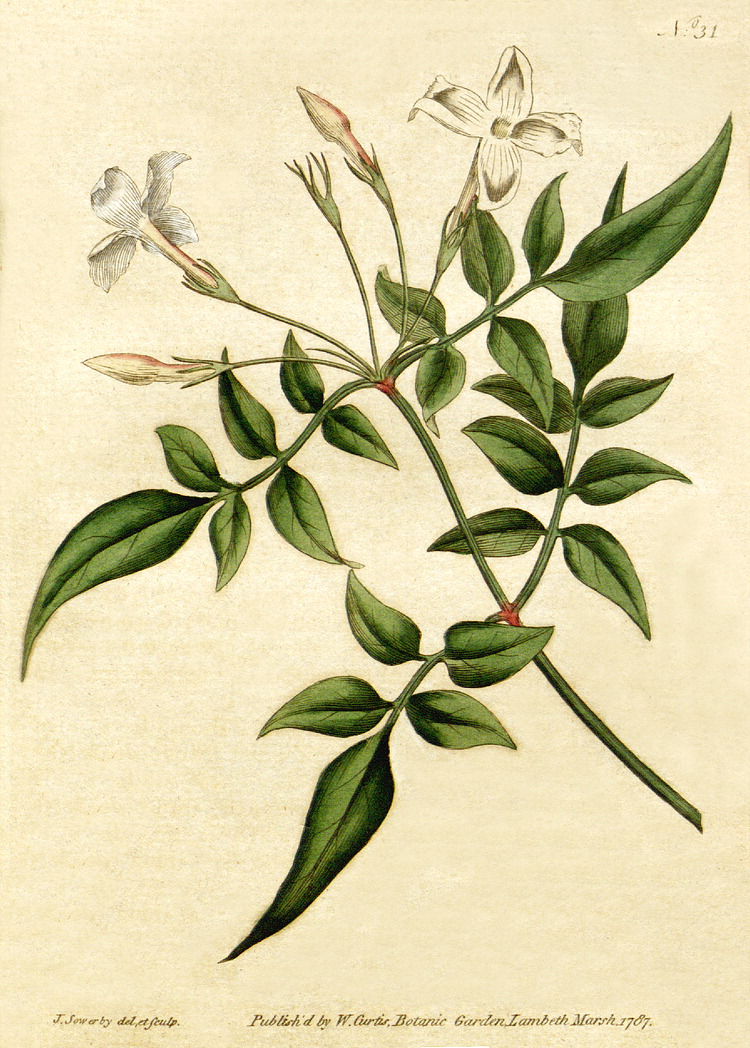
Wikimedia Commons / CC BY-SA
Parts Used
Flower
Therapeutic Uses
Anxiety and stress (aromatherapy — clinical evidence), depression, insufficient breast milk (galactagogue — topical application reduces engorgement), liver conditions, skin conditions. PRIMARILY AROMATHERAPY AND TOPICAL.
Herbal Actions
Anxiolytic (aromatherapy — evidence for stress reduction), antidepressant, antispasmodic, galactagogue, antimicrobial
Active Constituents
Volatile oil (benzyl acetate 15%, linalool, benzyl benzoate, cis-jasmone, indole), flavonoids, alkaloids (jasminine trace)
Preparation Methods
☕ Herbal Tea⚗️ Essential Oil🏺 Tincture
Traditional Preparation Notes
| Herbal Tea | 1–2 tsp dried flowers per 250ml, steep 5 min — gentle, fragrant, 2–3x daily |
| Tincture | 2–4 ml (1:5, 40% ethanol), 2–3x daily |
| Notes | Essential oil aromatherapy: clinical trials confirm anxiolytic effects (inhale or massage). Applied to breasts: reduces milk production (engorgement management during weaning). Tea: gentle anxiolytic and carminative. Often blended with green tea. |
Safety Information
Safety Rating
✓ Generally Safe
Pregnancy
Caution in Pregnancy
Drug Interactions
None known
Contraindications: Topical flower packs reduce milk supply — avoid during nursing if wanting to maintain supply. Therapeutic doses in pregnancy — caution (emmenagogue). Essential oil: skin sensitization possible.
Side Effects: Contact sensitization (essential oil). GI upset at high internal doses. Skin rash. Generally very well tolerated.