Rosaceae
Chokecherry
Prunus virginiana
⚠ Use with Caution
Avoid in Pregnancy
Native to: North America
Also known as: Western Chokecherry, Bitter-berry, Virginia Bird Cherry
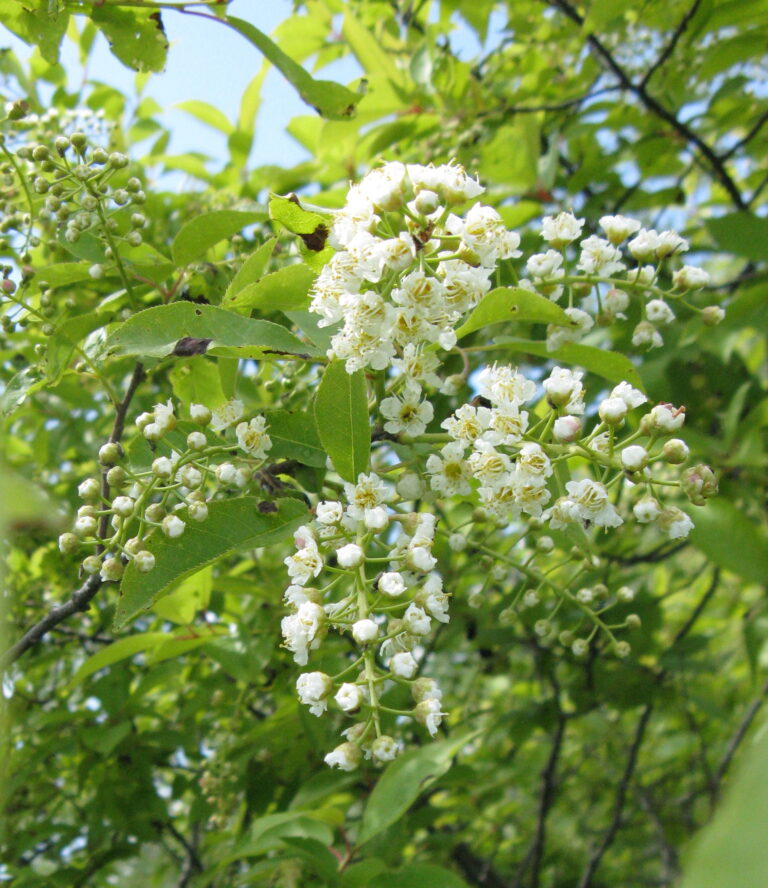
Wikimedia Commons / CC BY-SA
Parts Used
BarkBerry
Therapeutic Uses
Cough (antitussive bark), bronchial spasm, cold and flu, diarrhea. Traditional Native American medicine.
Herbal Actions
Bark: antispasmodic, antitussive, sedative (mild). Berry: antioxidant, astringent, nutritive
Active Constituents
Bark: prunasin and amygdalin (cyanogenic glycosides — release HCN when damaged), tannins, scopoletin. Berry: anthocyanins, flavonoids, vitamin C
Preparation Methods
🏺 Tincture☕ Herbal Tea
Traditional Preparation Notes
| Herbal Tea | Bark: 1 tsp dried bark per 250ml, steep 10 min — very low dose, 2x daily |
| Tincture | 1–2 ml (1:10, 45% ethanol), 2–3x daily — LOW DOSE |
| Notes | LOW DOSE. Cyanogenic glycosides in bark release HCN if misused. Proper tincture preparation converts to safer forms. Berries edible when ripe but very astringent — traditional food when cooked. Pits NEVER eat (cyanide). |
Safety Information
Safety Rating
⚠ Use with Caution
Pregnancy
Avoid in Pregnancy
Drug Interactions
None known
Contraindications: Pits contain high cyanide — never eat seeds. Avoid in pregnancy. Low dose herb. Liver disease — avoid. Never use fresh bark in large amounts.
Side Effects: HCN toxicity if misused. GI upset. Headache. Low doses generally safe with proper preparation.