Apiaceae
Parsley
Petroselinum crispum
⚠ Use with Caution
Caution in Pregnancy
Native to: Mediterranean, Middle East
Also known as: Common Parsley, Garden Parsley, Rock Parsley
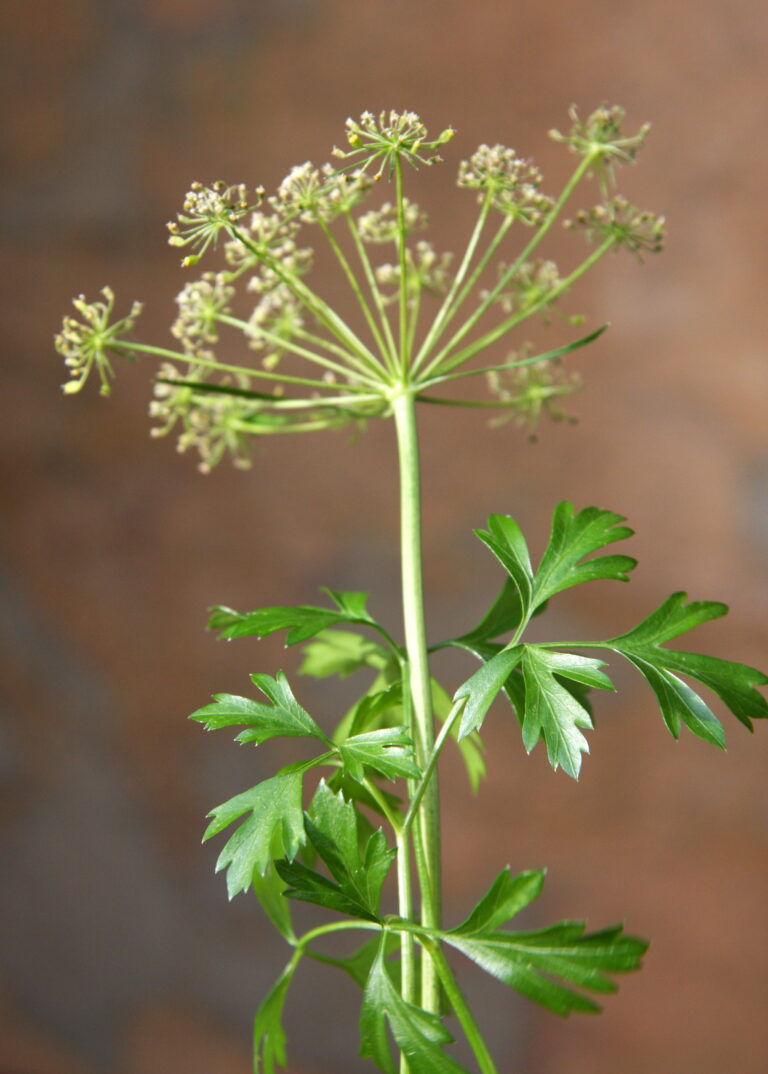
Wikimedia Commons / CC BY-SA
Parts Used
LeafSeedRoot
Therapeutic Uses
Urinary tract infections, kidney stones (prevention — diuretic, reduces oxalate), edema, digestive flatulence, nutritional support (rich in vitamin K, C, iron). Seed: delayed menstruation.
Herbal Actions
Diuretic, emmenagogue (seed), carminative, hepatic, nutritive (leaf), antioxidant
Active Constituents
Volatile oil (apiol — in seed, primarily, myristicin, terpinene), flavonoids (apigenin, luteolin), vitamin C and K (leaf), iron, calcium
Preparation Methods
☕ Herbal Tea🏺 Tincture
Traditional Preparation Notes
| Herbal Tea | 2 tsp fresh herb or 1 tsp dried per 250ml, steep 10 min, 3x daily |
| Tincture | 2–4 ml (1:5, 25% ethanol), 3x daily |
| Notes | Leaf as food — excellent nutritive source. Seed contains apiol — more potent and potentially toxic. Internal seed oil contraindicated. Leaf tea safe and effective for urinary support. |
Safety Information
Safety Rating
⚠ Use with Caution
Pregnancy
Caution in Pregnancy
Drug Interactions
Possible — consult doctor
Contraindications: Seed and seed oil: avoid in pregnancy (abortifacient via apiol). Avoid high medicinal doses in kidney disease (oxalate). Caution with warfarin (vitamin K).
Side Effects: Seed oil: kidney damage, liver toxicity, uterotonic. Leaf: extremely safe. Photosensitivity with furanocoumarin content.