Orobanchaceae
Eyebright
Euphrasia officinalis
✓ Generally Safe
Caution in Pregnancy
Native to: Europe
Also known as: Common Eyebright, Meadow Eyebright, Red Eyebright
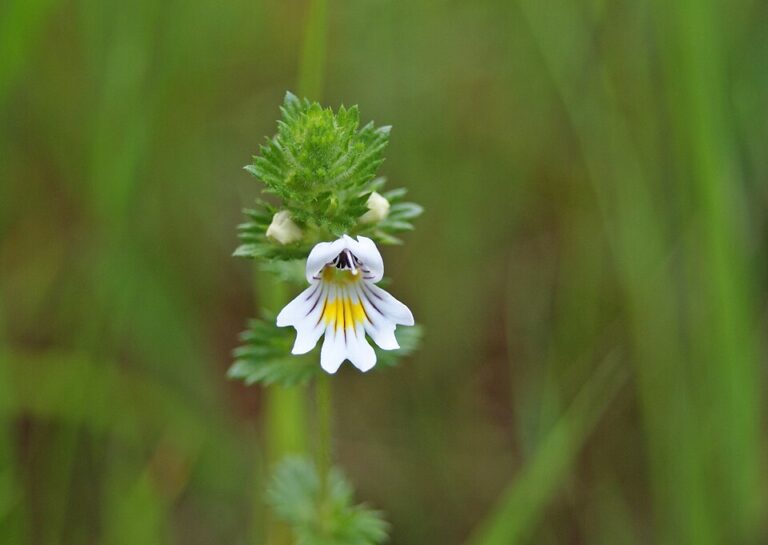
Wikimedia Commons / CC BY-SA
Parts Used
LeafFlower
Therapeutic Uses
Allergic rhinitis (hay fever), conjunctivitis (topical eye wash), eye inflammation, upper respiratory catarrh, sinusitis. Specific affinity for mucous membranes of eyes and upper respiratory tract.
Herbal Actions
Astringent, anti-inflammatory, antimicrobial, antihistamine (flavonoids), mucous membrane tonic
Active Constituents
Iridoids (aucubin, catalpol, euphroside), flavonoids (quercetin, rutin, apigenin), tannins, phenolic acids, volatile oil
Preparation Methods
☕ Herbal Tea🏺 Tincture
Traditional Preparation Notes
| Herbal Tea | 1–2 tsp dried herb per 250ml, steep 10 min, 3x daily (internal and as eye wash when strained) |
| Tincture | 2–4 ml (1:5, 25% ethanol), 3x daily |
| Notes | Eye wash: brew VERY strong tea (2 tbsp/250ml), strain through sterile coffee filter, cool, use as eye bath 3x daily. Must be sterile and strained — any debris irritates eyes. Combine with elderflower for hay fever. |
Safety Information
Safety Rating
✓ Generally Safe
Pregnancy
Caution in Pregnancy
Drug Interactions
None known
Contraindications: Eye wash must be perfectly sterile and strained — eye infections risk from contaminated preparations. No significant internal contraindications.
Side Effects: Contaminated eye wash can cause eye irritation or infection. Internal use: rare GI upset. Generally very safe.