
Adoxaceae
Cramp Bark
Viburnum opulus
✓ Generally Safe
Caution in Pregnancy
Native to: Europe, North America, Asia
Also known as: Guelder Rose, Water Elder, European Cranberry, High Bush Cranberry
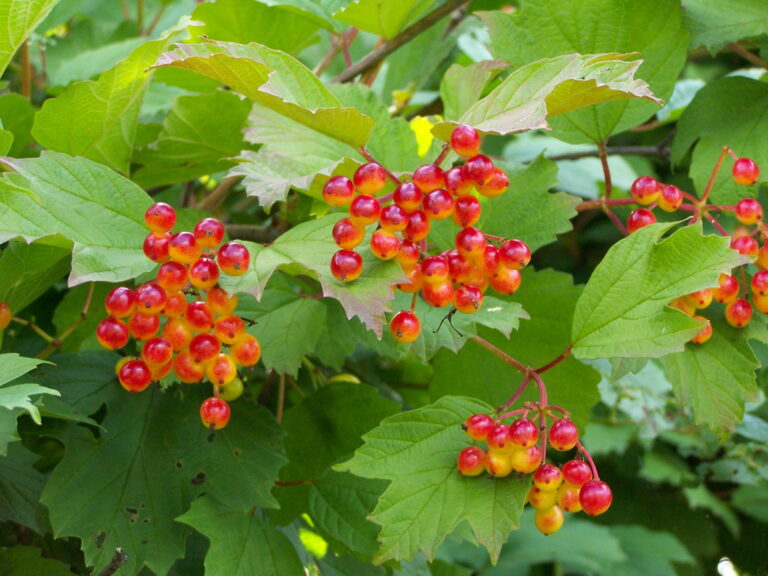
Wikimedia Commons / CC BY-SA
Parts Used
Bark
Therapeutic Uses
Menstrual cramps (dysmenorrhea — premier antispasmodic herb), threatened miscarriage (relaxes uterine spasm), muscle cramps and spasms, IBS spasm, leg cramps, back spasm. Most specific herb for uterine cramping.
Herbal Actions
Antispasmodic (uterine and skeletal muscle), relaxant, sedative, astringent
Active Constituents
Scopoletin (coumarin — primary antispasmodic), viburnin, tannins, resin, salicosides, methylarbutin
Preparation Methods
🏺 Tincture🍵 Decoction💊 Capsule
Traditional Preparation Notes
| Herbal Tea | 2 tsp dried bark per 250ml, simmer 15 min, 3x daily or as needed |
| Tincture | 4–8 ml (1:5, 40% ethanol), every 2–3 hours during acute cramping |
| Notes | Take at onset of cramps — prevention more effective than waiting. During acute cramps: high dose (6–8ml) every 2 hours. Prophylactic: start 2–3 days before expected menstruation. |
Safety Information
Safety Rating
✓ Generally Safe
Pregnancy
Caution in Pregnancy
Drug Interactions
None known
Contraindications: Avoid high doses in early pregnancy (use with medical guidance for threatened miscarriage). Tinnitus at very high doses (salicylate-like).
Side Effects: Tinnitus at very high doses. Mild GI upset. Berries raw toxic — bark only. Generally very well tolerated.